
Introduction
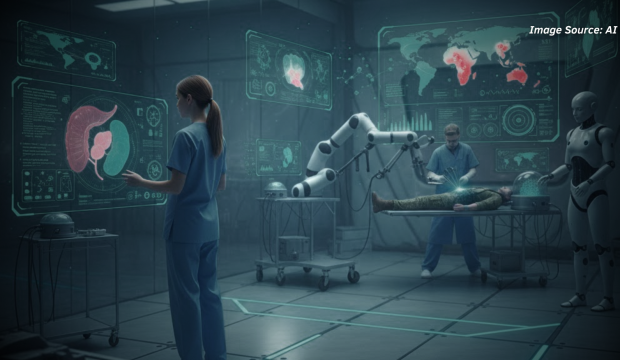
Current warfare has contributed to awareness of advanced and complicated health problems. Artificial intelligence is an essential component in transforming healthcare on the battlefield, and its importance is increasing day by day to upgrade their military strength.1 Automation tools are improving diagnostic capabilities, enabling quick and accurate decision-making ability during warfare, and ultimately saving more lives.2,3 Today’s defence healthcare system and military operations both make extensive use of artificial intelligence. Utilising and collecting real-time data during military operations and times of war is advantageous and aids in coping with stressful circumstances.4 Memorandum of Understanding (MoU) of Government research departments, like DRDO5, with IIT and other leading universities to develop a number of useful AI-based innovations, including portable diagnostic devices, health monitoring devices, and injury assessment tablets.
In order to provide the severely injured soldier or medic with the right care, artificial intelligence-based telemedicine platforms typically offer dose individualisation under specialised medical care systems and effectively allocate all available resources.6 Some of the recent innovations demonstrated by pilot projects focused on biological surveillance and AI-operated battlefield diagnosis, two essential elements in enhancing soldier health analytics and biodefense availability. Since technology has become a necessary tool in every aspect of life in the modern world, we can improve intervention and operational resilience in the security sector to keep our security system up to date and prepared for any kind of operation at all times.
Combat Casualty Care: How AI is Saving Lives on the Battlefield
Military medical personnel struggle to treat and recover from combat casualties. It becomes extremely difficult because even a small error or delay can have a life-altering effect. Technological advancements have significantly changed how these conditions are handled and allowed doctors to predict the precise course of treatment in any case. It enhances patient care, treatment methods, and patient dignity.7 One of the most remarkable inventions is the assessment of injuries by robots.8 Portable AI-enabled gadgets now enable field doctors to rapidly scan wounds, burns, and injuries, categorise their severity, and suggest specific treatments using state-of-the-art computer vision and deep learning technologies. These tools are delivering skills to the front lines that were previously only available to trauma specialists. As an example, Israel has linked smartphone-based AI triage apps straight into battlefield ambulances, enabling paramedics to identify critical cases more quickly and accurately;9 the US Army’s AI Hemorrhage Detection Systems assist medics in quickly determining whether bleeding is under control and determining evacuation priorities;10 and BAE Systems’ BATDOK (Battlefield Assisted Trauma Distributed Operations Kit)11 digitizes battlefield care by syncing medical records across all treatment stages.
The next generation of battlefield medical technology is represented by cutting-edge technologies such as the University of Pittsburgh’s TRACIR (Trauma Care in a Rucksack),12 a backpack-sized platform that offers autonomous trauma care and predictive analytics after being trained on more than 7,000 trauma case datasets. Similar to this, DARPA’s ITM technology serves as a virtual medic for triaging injured patients on the battlefield,13 providing combat medics with real-time direction. Particularly in difficult border areas like Ladakh and the northeast, the Indian Army has implemented AI-enhanced telemedicine solutions with advanced algorithms that help with remote casualty triage. Through these devices, medical personnel can send vital signs and injury photos to specialists based at base hospitals, who can then provide real-time frontline treatment guidance. SAMPARC (Smart Automated Management of Patients and Risks),14 an AI-powered patient tracking program with sophisticated geo-fencing and facial recognition features, was created by the DRDO’s Centre for Artificial Intelligence and Robotics. Additionally, to improve medics’ decision-making under great stress, training uses specialised AI combat trauma simulation programs that mimic high-pressure situations.
Predictive AI: Saving Lives Before Symptoms Appear
Predictive monitoring with AI is arguably the most revolutionary development in military healthcare. These algorithms can predict potentially fatal consequences, like hemorrhagic shock, before they appear clinically by examining patient patterns and battlefield circumstances. Crucial intervention periods that could make the difference between life and death are made possible by this early warning capacity. In order to facilitate proactive medical interventions, MITRE and the Department of Defence developed the MERIT (Medical Evaluation Readiness Information Toolset),15 which forecasts the possibility that service members will enrol in the Disability Evaluation System within six months. Another innovation is the REACH-VET system16 from the Department of Veterans Affairs, which uses AI to evaluate medical records and identify veterans who are at risk of suicide, offering vital early intervention chances. In the meantime, wearable sensor data is synchronised in real-time by the Joint Health Services’ MedCOP (Medical Common Operating Picture),17 enabling thorough health monitoring capabilities during military operations.
Predictive AI technologies are being aggressively incorporated into the healthcare delivery system of the Indian Armed Forces Medical Services (AFMS). The AFMS has implemented advanced AI-powered medical triage systems18 under the direction of Surgeon Vice Admiral Arti Sarin, which have greatly enhanced patient outcomes and emergency response times.19 In particular, Defence Minister Rajnath Singh has emphasised how AI-powered triage systems and India’s own Trauma Management Systems are transforming combat medical preparedness in all three forces.20 India is creating its own domestic solutions, building on international technologies such as the US military’s TRACIR (Trauma Care in a Rucksack)21 system, a platform the size of a backpack that tracks vital signs and notifies medical personnel of worsening circumstances. The most prominent of the extensive AI-based health monitoring tools developed by the DRDO’s Centre for Artificial Intelligence and Robotics (CAIR) is ATMAN.AI, a sophisticated COVID-19 detection program22 that examines chest X-rays and accurately categorises pictures as normal, COVID-19, or pneumonia. Automated Tools and technology for the diagnosis is both flexible and accurate.
AI-Assisted Battlefield Triage:
Lack of time, stress, and a shortage of tools and equipment are the main problems in combat healthcare. Modern instruments and technologies aid in resolving these problems and delivering better patient care.23 The United States military has developed a deployable CT scanner with Philip Healthcare, which can be controlled by artificial intelligence. Additional projects from the defence department include a shock detection machine that can stop traumatic brain injury, haemorrhage, and tension pneumothorax.24 To accurately detect any type of medical abnormality during routine examination, numerous tools are being developed. Some of them can detect implanted foreign objects in the body and provide real-time scans. Battery-operated portable devices that track cardiac monitoring, infection detection, and blood analysis.25 Lieutenant General Sadhna S. Nair, Director General of Army Medical Services,26 has highlighted the significance of over 50 telemedicine nodes linked by ISRO’s satellite networks. For soldiers stationed from Ladakh to the Northeast27, these remote stations use AI algorithms to assist with diagnosis and treatment recommendations. Mobile AI decision-support technologies now enable real-time monitoring and treatment guidance, even under the most challenging operational conditions.
AI makes it simple to track many vital variables that are helpful in patient care, such as the patient’s medical history, allergies, environmental factors, disease condition, and mental health. The US military’s FDA-approved mobile application begins treating the patient before he even gets to the hospital and provides all of his crucial details.28 Similarly, NATO must create interoperable shared AI triage and diagnosis systems to ensure medical assistance and batter care.29
Advanced Trauma Diagnostics: Transforming Battlefield Care
Advanced tools help medical experts to provide accurate and real-time care in stressful conditions. AI will be able to work accurately, easily, quickly and precisely. An AI disease Diagnostic technique can be more accurate and can be identified at an early stage. X-rays, CT scans, and ultrasounds can also be more accurate, and we can get the report more quickly with the help of AI technology, which will also it will improve the accuracy of the result.30 AI- augmented radiology systems are now able to minimise the radiation exposure while preserving image quality by using sophisticated reconstruction algorithms.31 For quickly identifying internal injuries and fractures, evacuation conditions and treatment options for this NATO is practising a platform. By using a portable AI diagnostic tool, the healthcare system is transforming beyond imagination. Nowadays, even with the help of a smartphone, we can track cardiac health, detect infection signs and perform rapid blood panels. Advice on treatment is made possible by FDA-approved point-of-care AI software used by the US military before a patient ever arrives at a hospital.32 While DoD-backed portable blood analysis instruments provide near-hospital diagnostics at forward operating bases, NATO’s interoperable AI diagnostic technologies guarantee smooth collaboration across partner forces.33
Troop Health Analytics and Predictive Medicine
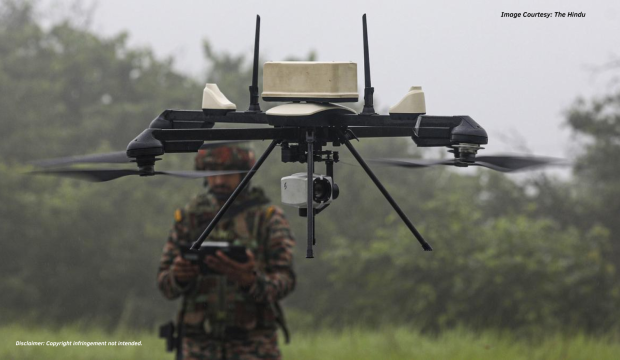
As troop health is very important, real-time monitoring will minimise the risk and help in getting accurate results. With different types of sensors, we can detect different types of physiological changes and any undesirable changes, no matter how minor, that might have a harmful impact. The US army provide their each soldier a device developed by the Human Weapon System (OHWS) for fitness score while protecting their privacy,34 which also identifies signs that indicate the need for treatment, such as dehydration and fatigue.35 The Indian government also designed a new device in collaboration with MIT that monitors blood loss, heart rate, respiration rate and blood pressure of an injured person to make an alert if required.36 There are few artificial intelligence tools that help in predicting epidemiological to anticipate physiological changes so that Armed Forces Medical Services (AFMS) drones can assist in real-time delivering medical supplies to remote locations. The Indian military also used these tools in medical services to mitigate avoidable problems. Such a kind of implementation helps the soldiers to stay motivated and prepared for any kind of conflict. These tools also monitor their physical health so that they can complete tasks.37
India’s Progress and Gaps
In partnership with IIT and other top universities, the Centre for Artificial Intelligence and Robotics (CAIR),38 a program of DRDO, 39,40 launches a telemedicine network, bringing about significant changes. However, there are still some significant issues that need to be fixed, such as the fact that many field research tools are not being evaluated for their usefulness and capabilities. Inadequate cloud storage and a shortage of skilled personnel in medical facilities, along with the fact that many field-ready instruments remain untested, must be addressed in the near future by establishing clear regulatory and validation channels for military medical AI. It is also crucial to strengthen cloud storage and secure networks for medical data. The medical diagnostic and defence-related technologies developed by these startups, Qure.ai, Niramai, Predible Health, HealthifyMe, Tricog, Artelus, and ChironX35, are powered by artificial intelligence. We have been using some logistics tools like PhrmEasy41 42, for which we continue to use and improve our supply chain and logistical requirements. In terms of research, we see a great new area in academic industry collaboration, which is developing and testing out many of these tools to improve on what we have presented.
Future Aspects:
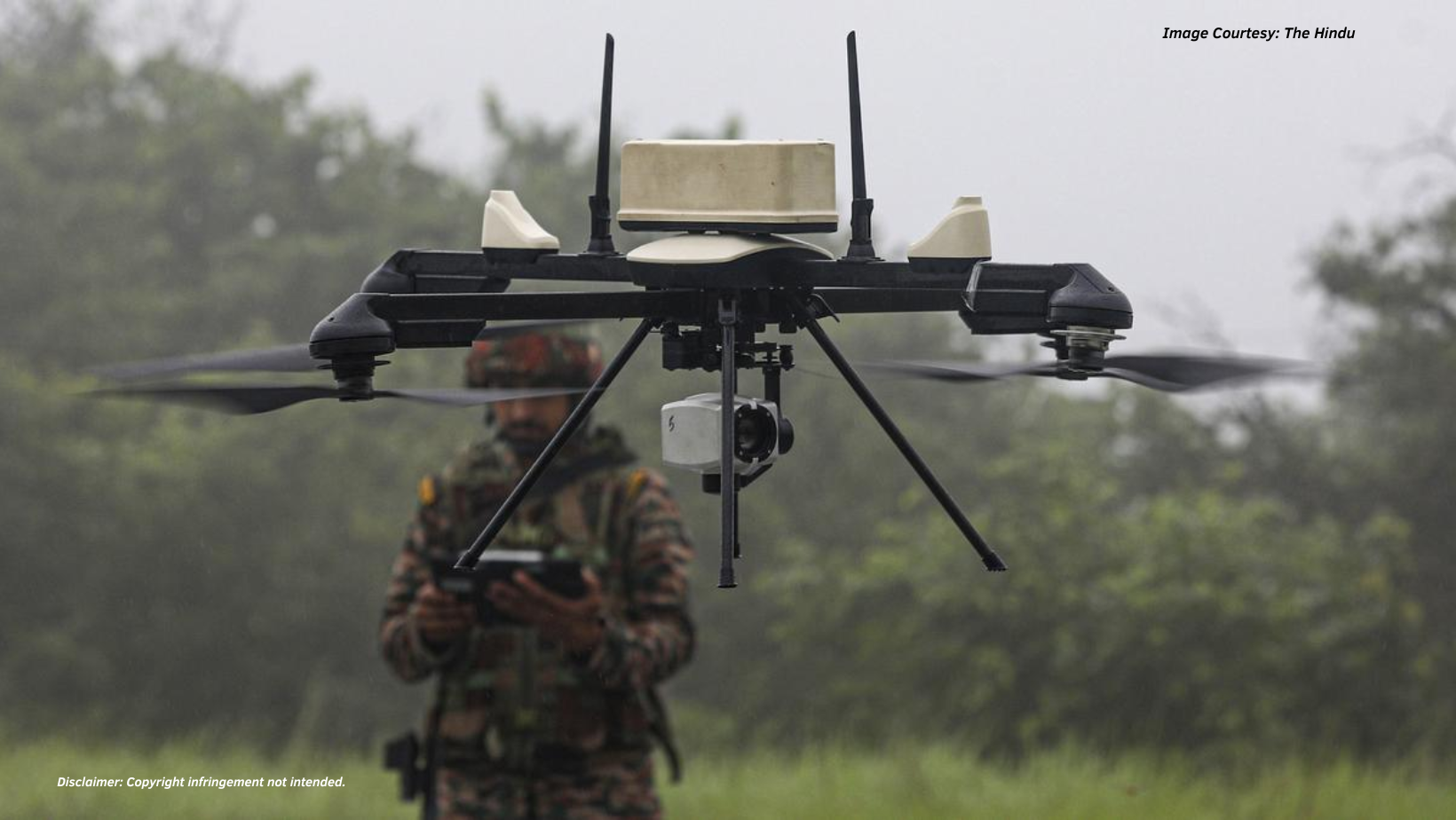
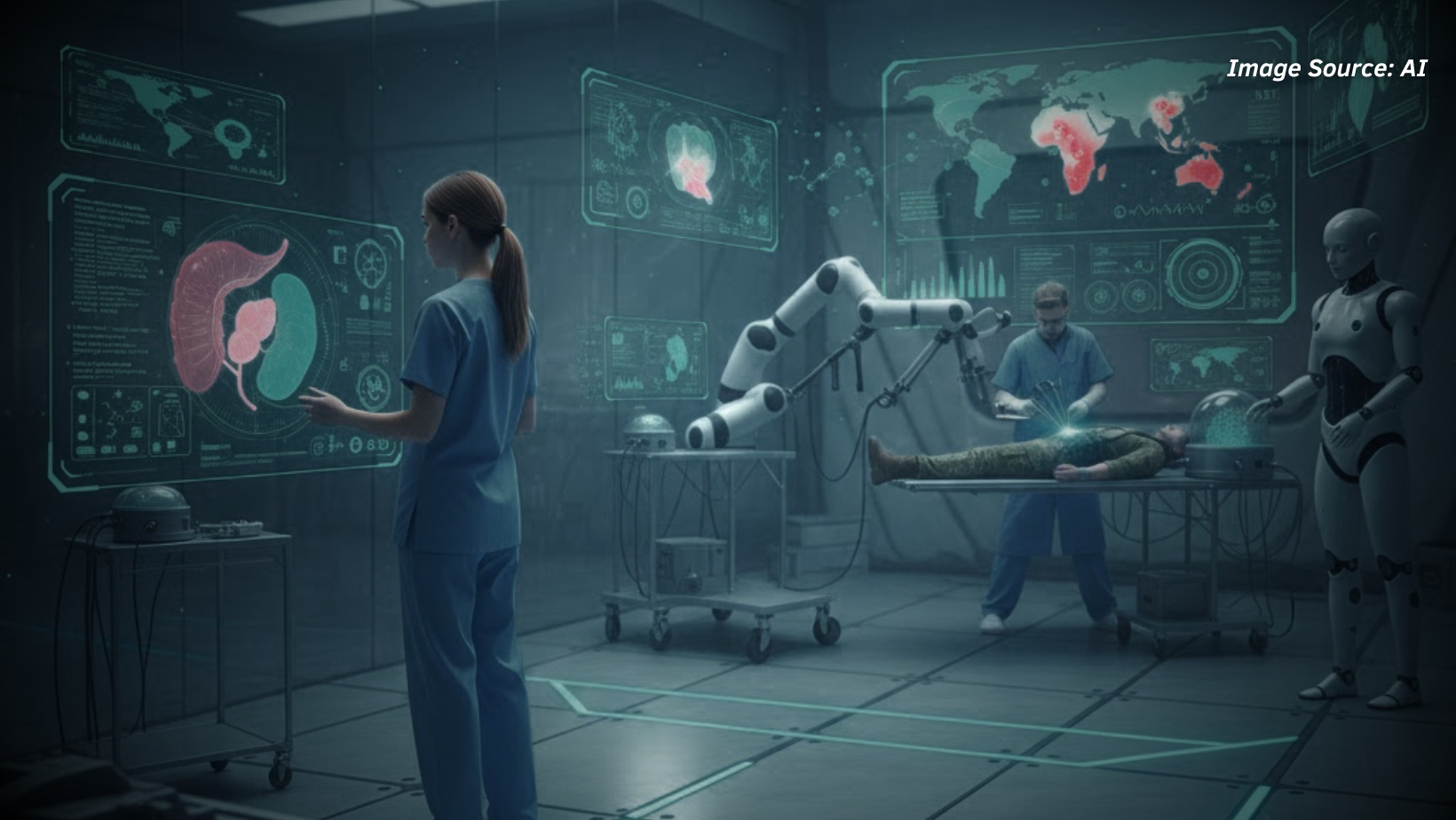
AI tools are a support structure for doctors, which will see to quick diagnosis, and we also see them play a great role in choosing the best line of treatment. In the near future, some robots may perform surgery as well as complex operations with expert guidance. Also we have medical devices which will identify the injury and the extent of it which in turn will report back the severity of the wound and also will play a role in trauma management. We will see the use of self-driven robotic devices like drones, which will drop off required medicine at the battlefield for real-time treatment.
Conclusion
Through the use of advanced technologies, we are able to improve military medical services and biodefense systems, which in turn increases their performance in terms of diagnosis and treatment. We see that which tools enable doctors to access patient history and other key info which in turn we are able to put together better medication and treatment strategies for our patients, which also sees a reduction in the number of casualties. In the medical field, modern devices and tools help in early detection and diagnosis, which will help in the patient treatment in real time. Modern AI devices and tools can be used to store the patient’s medical history and problems they may have experienced in the past. Using Artificial Intelligence in the medical field or for patient care can improve the recovery rate and minimise the causality. Artificial Intelligence cannot replace medical professionals. It will always work as an assistant for the experts in every way. AI can improve the accuracy and can also remove human error. With this advancement, India can lead in military healthcare innovation by saving more lives on the battlefield.
DISCLAIMER
The views expressed in this monograph are solely those of the author and do not necessarily reflect the opinions or policies of CENJOWS. The author affirms that this work is an original piece of scholarly research, has not been published or submitted for publication elsewhere (in print or online), and that all data, facts, and figures cited are appropriately referenced and believed to be accurate to the best of the author’s
References
Rashid, Adib Bin, Ashfakul Karim Kausik, Ahamed Al Hassan Sunny, and Mehedy Hassan Bappy. 2023. “Artificial Intelligence in the Military: An Overview of the Capabilities, Applications, and Challenges.” International Journal of Intelligent Systems 2023 (1). https://doi.org/10.1155/2023/8676366.
Khosravi, Mohsen, Zahra Zare, Seyyed Morteza Mojtabaeian, and Reyhane Izadi. 2024. “Artificial Intelligence and Decision-Making in Healthcare: A Thematic Analysis of a Systematic Review of Reviews.” Health Services Research and Managerial Epidemiology 11 (January): 23333928241234863. https://doi.org/10.1177/23333928241234863.
MacIntyre, Michael R., Richard G. Cockerill, Omar F. Mirza, and Jacob M. Appel. 2023. “Ethical Considerations for the Use of Artificial Intelligence in Medical Decision-making Capacity Assessments.” Psychiatry Research 328 (September): 115466. https://doi.org/10.1016/j.psychres.2023.115466.
Kegyes, Tamás, Zoltán Süle, and János Abonyi. 2024. “Machine Learning -based Decision Support Framework for CBRN Protection.” Heliyon 10 (4): e25946. https://doi.org/10.1016/j.heliyon.2024.e25946.
MP-IDSA. 2025. “Strengthening Defence R&D: Role of Academia” March 1, 2025. https://www.idsa.in/publisher/issuebrief/strengthening-defence-rd-role-of-academia.
Kuziemsky, Craig, Anthony J. Maeder, Oommen John, Shashi B. Gogia, Arindam Basu, Sushil Meher, and Marcia Ito. 2019. “Role of Artificial Intelligence Within the Telehealth Domain.” Yearbook of Medical Informatics 28 (01): 035–040. https://doi.org/10.1055/s-0039-1677897.
Carlozzi, Noelle E., Tracey A. Brickell, Louis M. French, Angelle Sander, Anna L. Kratz, David S. Tulsky, Nancy D. Chiaravalloti, et al. 2016. “Caring for Our Wounded Warriors: A Qualitative Examination of Health-related Quality of Life in Caregivers of Individuals With Military-related Traumatic Brain Injury.” The Journal of Rehabilitation Research and Development 53 (6): 669–80. https://doi.org/10.1682/jrrd.2015.07.0136.
Knudsen, J. Everett, Umar Ghaffar, Runzhuo Ma, and Andrew J. Hung. 2024. “Clinical Applications of Artificial Intelligence in Robotic Surgery.” Journal of Robotic Surgery 18 (1): 102. https://doi.org/10.1007/s11701-024-01867-0.
Karra, Y. (2025, January 2). Breakthrough AI predicts where and when the next medical emergency will happen. ISRAEL21c. https://israel21c.org/using-ai-to-predict-where-and-when-medical-crises-may-occur/
“FDA Clears First AI Software for Hemorrhage Triage of Combat Casualties.” 2024. Www.Army.Mil. April 10, 2024. https://www.army.mil/article/275249/fda_clears_first_ai_software_for_hemorrhage_triage_of_combat_casualties.
Langford, Craig, and Craig Langford. 2025. “BAE to Work on Battlefield Medical App for U.S. Air Force.” UK Defence Journal. July 14, 2025. https://ukdefencejournal.org.uk/bae-to-work-on-battlefield-medical-app-for-u-s-air-force/.
“TRAuma Care in a Rucksack (TRACIR) | Center for Military Medicine Research.” n.d. https://www.cmmr.pitt.edu/projects/trauma-care-rucksack-tracir.
“DARPA Triage Challenge. DARPA.” n.d. https://www.darpa.mil/research/challenges/darpa-triage-challenge.
IANS, “DRDO Develops Software Tool for Tracking COVID-19 Patients in Quarantine,” The News Minute, July 14, 2020, https://www.thenewsminute.com/telangana/drdo-develops-software-tool-tracking-covid-19-patients-quarantine-128596.
Rakhilin, Nikolai, H. Douglas Morris, Dzung L. Pham, Maureen N. Hood, and Vincent B. Ho. 2025. “Opportunities for Artificial Intelligence in Operational Medicine: Lessons From the United States Military.” Bioengineering 12 (5): 519. https://doi.org/10.3390/bioengineering12050519.
Landes, Sara J., Bridget B. Matarazzo, Jeffery A. Pitcock, Karen L. Drummond, Brandy N. Smith, JoAnn E. Kirchner, Kaily A. Clark, et al. 2024. “Impact of Implementation Facilitation on the REACH VET Clinical Program for Veterans at Risk for Suicide.” Psychiatric Services 75 (8): 726–32. https://doi.org/10.1176/appi.ps.20230277.
Naval Health Research Center, Cheryl Olson, Britt Bohannan, Ray Peel, Robert Jeschonek, Tom Leap, and MTS Technologies, Inc. 2006. “Test and Evaluation of the Medical Common Operational Picture (MedCOP).” Technical Document No. 06-3C. Naval Health Research Center. https://apps.dtic.mil/sti/pdfs/ADA462281.pdf.
The Week News Desk. 2025. “‘Surgeon Vice Admiral Arti Sarin Is a Shining Example of Women Power in Military.’” The Week, April 3, 2025. https://www.theweek.in/news/defence/2025/04/03/surgeon-vice-admiral-arti-sarin-is-a-shining-example-of-women-power-in-military.html.
ANI, “Trauma Care Has Been Revolutionized with Focus on Battlefield Injury Management: Rajnath Singh,” ETHealthWorld, February 9, 2025, https://health.economictimes.indiatimes.com/news/policy/trauma-care-has-been-revolutionized-with-focus-on-battlefield-injury-management-rajnath-singh/118086912.
Ibid
“TRAuma Care in a Rucksack (TRACIR) | Center for Military Medicine Research.” n.d. https://www.cmmr.pitt.edu/projects/trauma-care-rucksack-tracir.
Defence Research and Development Organisation (DRDO), “AI-Based Intelligent COVID-19 Detector Technology for Medical Assistance,” Ministry of Defence, Government of India, accessed December 29, 2025, https://www.drdo.gov.in/drdo/ai-based-intelligent-covid-19-detector-technology-medical-assistance.
U.S. Government Accountability Office. GAO-22-104629: “Artificial Intelligence: An Update on GAO’s Role and Challenges.” Washington, DC: U.S. Government Accountability Office, July 2022. https://www.gao.gov/assets/gao-22-104629.pdf.
Tseng, Wen-Chang, Yung-Cheng Wang, Wei-Chi Chen, and Kang-Ping Lin. 2025. “Development of an AI Model for Pneumothorax Imaging: Dataset and Model Optimization Strategies for Real-world Deployment.” European Journal of Radiology Open 14 (June): 100664. https://doi.org/10.1016/j.ejro.2025.100664
Linh, Vo Thi Nhat, Seunghun Han, Eunhye Koh, Sumin Kim, Ho Sang Jung, and Jahyun Koo. 2024. “Advances in Wearable Electronics for Monitoring Human Organs: Bridging External and Internal Health Assessments.” Biomaterials 314 (September): 122865. https://doi.org/10.1016/j.biomaterials.2024.122865.
Council of Scientific and Industrial Research (CSIR). 2013. CSIR Annual Report 2012-2013. New Delhi: CSIR. https://www.csir.res.in/sites/default/files/2023-06/Annual%20Report%202012-2013English.pdf.
Jindal, Ak. 2009. “The Highest Battlefield of the World : Medical Problems and Solutions.” Medical Journal Armed Forces India 65 (2): 170–72. https://doi.org/10.1016/s0377-1237(09)80135-4.
Center for Devices and Radiological Health. 2022. “Device Software Functions Including Mobile Medical Applications.” U.S. Food And Drug Administration. September 29, 2022. https://www.fda.gov/medical-devices/digital-health-center-excellence/device-software-functions-including-mobile-medical-applications.
Shrestha, Bivor. 2024. “Enhancing Joint Medical Training and Interoperability: A Path Toward Integrated Care Across NATO and U.S. Forces.” Pulse of Army Medicine, November 22, 2024. https://www.lineofdeparture.army.mil/Journals/Pulse-of-Army-Medicine/Archive/November-2024-Issue/Enhancing-Joint-Care/.
Center for Devices and Radiological Health. 2022. “Device Software Functions Including Mobile Medical Applications.” U.S. Food And Drug Administration. September 29, 2022. https://www.fda.gov/medical-devices/digital-health-center-excellence/device-software-functions-including-mobile-medical-applications.
Jindal, Ak. 2009. “The Highest Battlefield of the World : Medical Problems and Solutions.” Medical Journal Armed Forces India 65 (2): 170–72. https://doi.org/10.1016/s0377-1237(09)80135-4.
Windecker, Daniel, Giovanni Baj, Isaac Shiri, Pooya Mohammadi Kazaj, Johannes Kaesmacher, Christoph Gräni, and George C. M. Siontis. 2025. “Generalizability of FDA-Approved AI-Enabled Medical Devices for Clinical Use.” JAMA Network Open 8 (4): e258052. https://doi.org/10.1001/jamanetworkopen.2025.8052.
Shrestha, Bivor. 2024. “Enhancing Joint Medical Training and Interoperability: A Path Toward Integrated Care Across NATO and U.S. Forces.” Pulse of Army Medicine, November 22, 2024. https://www.lineofdeparture.army.mil/Journals/Pulse-of-Army-Medicine/Archive/November-2024-Issue/Enhancing-Joint-Care/.
Hilmi, Aaqifah. 2025. “Wearables for Defense: The Next Frontier in Military Technology.” Sensio (blog). November 26, 2025. https://www.sensio-ai.in/post/wearables-for-defense-the-next-frontier-in-military-technology.
Yadav, Anurag, and Kusum Yadav. 2025. “Transforming Healthcare and Fitness With AI Powered Next-generation Smart Clothing.” Discover Electrochemistry. 2 (1). https://doi.org/10.1007/s44373-025-00015-z.
Yadav, Anurag, and Kusum Yadav. 2025. “Transforming Healthcare and Fitness With AI Powered Next-generation Smart Clothing.” Discover Electrochemistry. 2 (1). https://doi.org/10.1007/s44373-025-00015-z.
The Week News Desk. 2025. “‘Surgeon Vice Admiral Arti Sarin Is a Shining Example of Women Power in Military.’” The Week, April 3, 2025. https://www.theweek.in/news/defence/2025/04/03/surgeon-vice-admiral-arti-sarin-is-a-shining-example-of-women-power-in-military.html.
Defence Research and Development Organisation (DRDO), “AI-Based Intelligent COVID-19 Detector Technology for Medical Assistance,” Ministry of Defence, Government of India, accessed December 29, 2025, https://www.drdo.gov.in/drdo/ai-based-intelligent-covid-19-detector-technology-medical-assistance.
Rakhilin, Nikolai, H. Douglas Morris, Dzung L. Pham, Maureen N. Hood, and Vincent B. Ho. 2025. “Opportunities for Artificial Intelligence in Operational Medicine: Lessons From the United States Military.” Bioengineering 12 (5): 519. https://doi.org/10.3390/bioengineering12050519.
Defence Research and Development Organisation (DRDO), “AI-Based Intelligent COVID-19 Detector Technology for Medical Assistance,” Ministry of Defence, Government of India, accessed December 29, 2025, https://www.drdo.gov.in/drdo/ai-based-intelligent-covid-19-detector-technology-medical-assistance.
Shen, Jianwen, Fengjiao Bu, Zhengqiang Ye, Min Zhang, Qin Ma, Jingchao Yan, and Taomin Huang. 2024. “Management of Drug Supply Chain Information Based on ‘Artificial Intelligence + Vendor Managed Inventory’ in China: Perspective Based on a Case Study.” Frontiers in Pharmacology 15 (July): 1373642. https://doi.org/10.3389/fphar.2024.137364
Techsci Research Pvt Ltd. n.d. “The Role of AI in Medical Diagnostics in India.” https://www.techsciresearch.com/blog/revolutionizing-healthcare-the-role-of-ai-in-medical-diagnostics-in-india/4663.html.

Dr Nishakant Ojha
is a strategic expert on AI, quantum, and emerging technologies, analysing their impact on defence, intelligence, warfare, and geopolitics and a Chair of Excellence at CENJOWS