

Introduction
India-Russia ties have long been recognised as one of the most durable and time-tested strategic alliances in the global order. Its foundation were laid during a watershed event in 1971, when the Soviet Union provided steadfast diplomatic and military assistance to India during the Indo-Pakistan War.1 At a time when global alliances were shifting dramatically and numerous western nations were supporting Pakistan, Moscow’s stance provided India with the strategic security it sought. This support influenced not just the result of the war but also India’s view of the Soviet Union as a trustworthy and dependable ally. The recollection of that trust and confidence continues to shape India’s foreign pol2icy instincts and its long-standing comfort with Russian collaboration.
In today’s geopolitical environment, when rivalry among major countries is growing and global systems are fragmenting, this legacy has a significant impact on India’s decisions. The recently signed Reciprocal Exchange of Logistic Support (RELOS) agreement, which formalises reciprocal logistical support between the two countries, should be viewed within a larger historical and geopolitical framework.3 Although some Western media houses have portrayed the deal as Russia’s desperate bid to show that it is not isolated on the global stage, such readings ignore the underlying interdependence at work. India and Russia are not finding their way to each other; rather, they are strengthening and modernising a collaboration that has evolved over seven decades.
The Indo-Pacific region has become the focal point of global strategic rivalry, and India’s capacity to preserve flexibility and autonomy is critical to its foreign policy. Strengthening defence cooperation with Russia helps to retain autonomy while also providing Moscow with sustained access to Indian Ocean in an increasingly competitive environment. In this aspect, the RELOS pact is more than just a defensive arrangement.4 It reflects historical trust, serves as a conduit for developing military cooperation, influences geopolitical calculations, and provides a platform for further economic and energy collaboration. It marks a significant milestone in the next chapter of a collaboration characterised by both previous experience and future aspirations.
Operational Gains: Navy to Air Force Synergies
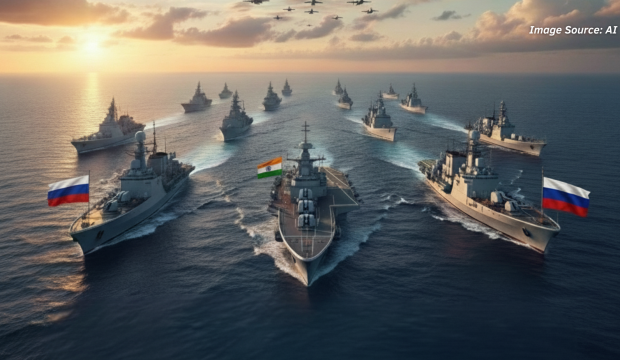
The RELOS pact provides some of its most obvious benefits in the operational realm, giving the Indian and Russian armies extraordinary flexibility, reach, and logistical depth. The Indian Navy’s ability to visit Russian ports in the Arctic, Pacific, and Far East significantly enhances its maritime presence. These regions have long been strategically significant yet operationally remote. With RELOS in place, Indian warships may refuel, restock, and do maintenance in Russian facilities, allowing for longer deployments and a more consistent presence in distant waters.5
This improves India’s capacity to engage in Arctic research missions, monitor changing realities along northern maritime routes, and gain experience with cold-water operations, which may become critical as polar regions open up owing to climate change. It also increases India’s ability to conduct joint exercises with Russia in these locations, enhancing interoperability and operational knowledge. Similarly, Russia benefits from having access to Indian facilities. The Indian Ocean remains an important maritime zone, and Russian navy vessels’ ability to refuel and replenish at Indian ports increases operating endurance in warm areas where numerous world powers are engaged.6
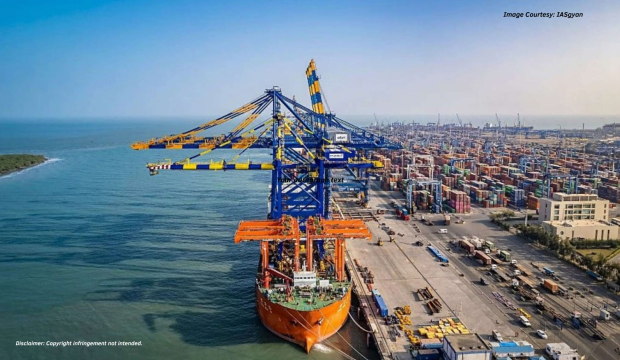
Access to Russian ports adds operational benefit by diversifying routes and mitigating risks. Traditional maritime routes connecting India to Europe and certain parts of Eurasia pass through the Strait of Hormuz, a small and heavily armed chokepoint susceptible to geopolitical tensions, sanction enforcement, and military escalation.7 Through access to Russian ports in the Far East and Arctic, India gets alternative options to this crowded route. Connectivity via the Chennai-Vladivostok route and prospective connectivity to the Northeastern Sea Route reduce transit distance and time while reducing the susceptibility to disturbances in West Asian waters. This diversity increases India’s marine resilience and strategic flexibility.
Equally important is the type of the logistical assistance provided by the RELOS pact. Beyond ordinary port halts, access includes refuelling, food and water replenishment, technical repairs, spare parts availability, medial aid, and repair mooring. This is especially critical for India, as a significant chunk of its naval and aviation system is Russian-made. Repairs, testing, and technical service may thus be carried out with greater accuracy at Russian facilities, where original equipment knowledge and compatible infrastructure are already available. This minimises downtime, logistical delays, and reliance on long supply chains, converting remote deployments into sustainable operations and improving overall operational preparedness.
This also enables Moscow to maintain strategic relevance and a security presence outside of its traditional spheres of influence. Both countries’ Air Forces get major benefits. Aircraft participating in training missions, joint exercises, disaster relief, or humanitarian activities can use each other’s air bases for refuelling and maintenance.8 This decreases transit times, alleviates logistical costs, and allows for more frequent and complicated collaborative action. For India, which has a substantial fleet of Russian-made aircraft having fast access to Russian facilities might help during certain maintenance procedures and technical aid for multilateral exercises. Overall, RELOS converts episodic collaboration into a dependable, organised framework that improves operational preparedness. It improves both militaries’ mobility, reach, and strategic agility in an increasingly competitive global order.
The Shifting Balance of Power
The RELOS agreement has come at a time when the global system is undergoing major redistribution of power, notably in the Indo-Pacific. As countries across the world vie for strategic alignment, India’s interaction with Russia demonstrates its willingness to preserve independence rather than opting for a global bloc and aligning with it. For decades, India’s foreign policy has been defined by non-alignment, allowing it to diversify its defence and diplomatic partnerships. By increasing its collaboration with Russia, India has recalibrated its foreign policy towards a new path of strategic multi-alignment. Considering this path, India’s current foreign policy is guided by its national interests rather than external expectations or ideological blocs.9
For the West, particularly the United States, India’s close ties with Russia convolute perceptions about regional alliances. Washington views India as a critical ally in countering China’s expansion in the Indo-Pacific. Nonetheless, the RELOS pact reminds the world that India’s strategic calculation is both autonomous and historically informed. Russia’s access to the Indian Ocean through RELOS, however limited to logistics and non-combat activities, quietly undermines a maritime environment long dominated by the United States and its allies.10 It also paves the way for Russian visibility in a theatre where it had been mostly absent since the Cold War.
At the same time, RELOS backs Russia’s quest for relevance in a global order in which its might is being tested on several fronts. Strengthening relations with India enables Moscow to demonstrate that it maintains significant ties despite Western pressure. For states in Africa, Asia, and the Middle East, the India-Russia dynamics affirm the notion that a multipolar world is forming, in which no single state or bloc can dictate results. In this sense, RELOS is more than just a defence agreement; it is a geopolitical signal. It reflects India’s assertiveness, Russia’s tenacity, and a larger move towards a more complicated balance of power in the Indo-Pacific.
Beyond Defence: The Rise of Strategic Economic Axis
The economic dimension of the India-Russia collaboration has expanded dramatically in recent years, giving the relationship a breadth that goes far beyond defence cooperation. India’s significantly increasing purchase of Russian crude oil, despite global sanctions and supply chain interruptions, highlights the pragmatic basis of this relationship. Affordable energy has enabled India to fix domestic fuel prices and build its refining industry, while Russia has secured a steady long-term market. This mutually advantageous agreement has transformed energy cooperation into a cornerstone of bilateral relations. It also strengthens India’s strategic autonomy by minimising over-reliance on a single energy supply or geopolitical bloc.
Trade and connectivity ventures help to enhance this burgeoning economic axis. Initiatives like the Chennai-Vladivostok Maritime Corridor shorten travel time, diversify India’s trade routes, and establish new business links between South Asia and Russia’s Far East. The Northern Sea Route, which is increasingly opening as a result of climate change, might provide India with faster access to Arctic trade routes.11 These advancements are supplemented by Russian interest in India’s industrial and technological sectors, as well as India’s increased engagement in resource extraction and energy infrastructure projects in Siberia and the Far East. Together, these modifications indicate a more organised and strategic economic involvement.
This growing economic cooperation is also influencing the geopolitical climate. As commerce, energy, and logistics grow more interconnected, both nations gain resistance to external pressures such as sanctions, supply chain disruptions, and geopolitical disputes.12 As a result, the economic axis stabilises the larger relationship, ensuring that collaboration is based on long-term development and commercial gains rather than only defence. By diversifying trade channels and increasing energy dependency, India and Russia are establishing a strategic economic framework that boosts their autonomy and influence in a rapidly changing global order.
Conclusion
The RELOS agreement marks another milestone in the India-Russia ties, not because it establishes a new relationship, but because it renews and deepens one built on decades of trust and shared strategic experience. From the assistance provided during the 1971 war to the complex military, economic, and geopolitical engagements of today, this alliance has continually shown resilience in the face of altering global currents. RELOS adds a new element to that history, improving operational collaboration between the two militaries and allowing India and Russia to collaborate with more mobility, reach, and predictability.
Besides the military realm, the pact symbolises a more fundamental balancing of global power relations. It emphasises India’s commitment to strategic autonomy. Russia’s pursuit for significance in an era of disputed geopolitics and the rise of a more multipolar Indo-Pacific order. The related economic and energy cooperation strengthens the partnerships, ensuring that they are characterised not only by defence but also by long-term developmental and commercial goals. In this regard, RELOS is both a historical product and a future-oriented instrument. It reinforces an old alliance, adapts to its new circumstances, and equips both nations to navigate a world in which power is more distributed and strategic decisions need independence, balance, and foresight.
DISCLAIMER
The paper is author’s individual scholastic articulation and does not necessarily reflect the views of CENJOWS. The author certifies that the article is original in content, unpublished and it has not been submitted for publication/ web upload elsewhere and that the facts and figures quoted are duly referenced, as needed and are believed to be correct.
References
- Multispectral Detection of Commercial Unmanned Vehicles.” ResearchGate. Accessed September 4, 2024. https://www.researchgate.net/
- “SAKSHAM System.” ACQIAS. Accessed November 12, 2025. https://www.acqias.com/

Ms Vaibhavi Katal
is a Research Assistant at CENJOWS