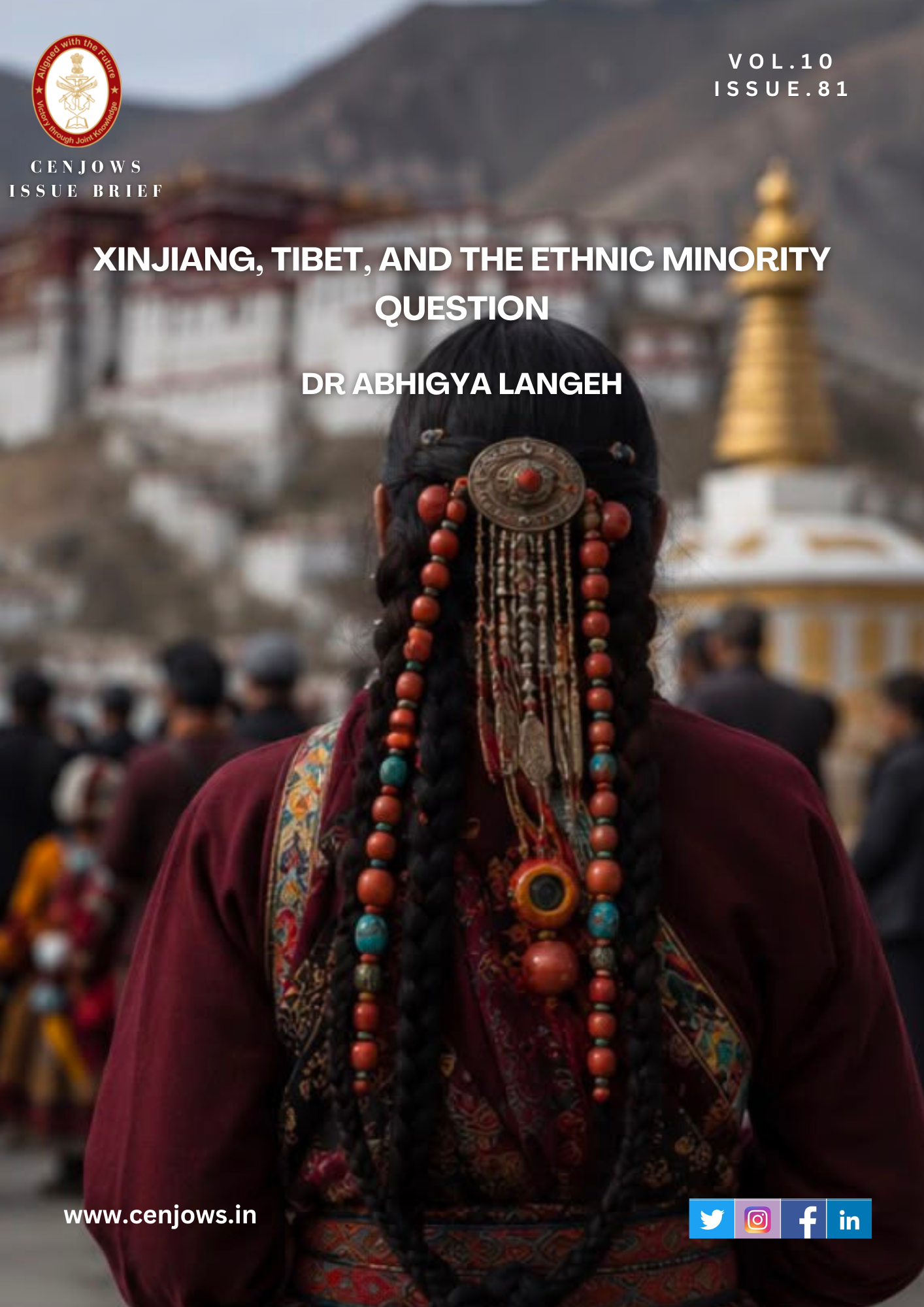

Few dimensions of contemporary Chinese governance attract as much international scrutiny or reveal as much about the internal architecture of the Chinese party-state as its management of ethnic minority regions. Xinjiang and Tibet occupy a distinctive place in Beijing’s political geography: both are officially designated “autonomous regions”, both sit astride sensitive international borders, both host non-Han populations with independent linguistic, religious, and historical identities, and both have become synonymous in Western policy discourse with mass surveillance, cultural restructuring, and human rights violations on a scale that has drawn condemnation from the United Nations, the United States, the European Parliament, and a broad coalition of human rights organisations. A third case, Inner Mongolia, offers an instructive comparative lens because it lacks the separatist violence. Beijing cites it to justify its Xinjiang policies, yet it has still experienced a comparable linguistic and cultural assimilation trajectory, which bears directly on how convincingly the counter-terrorism justification can explain the pattern as a whole.