
Abstract
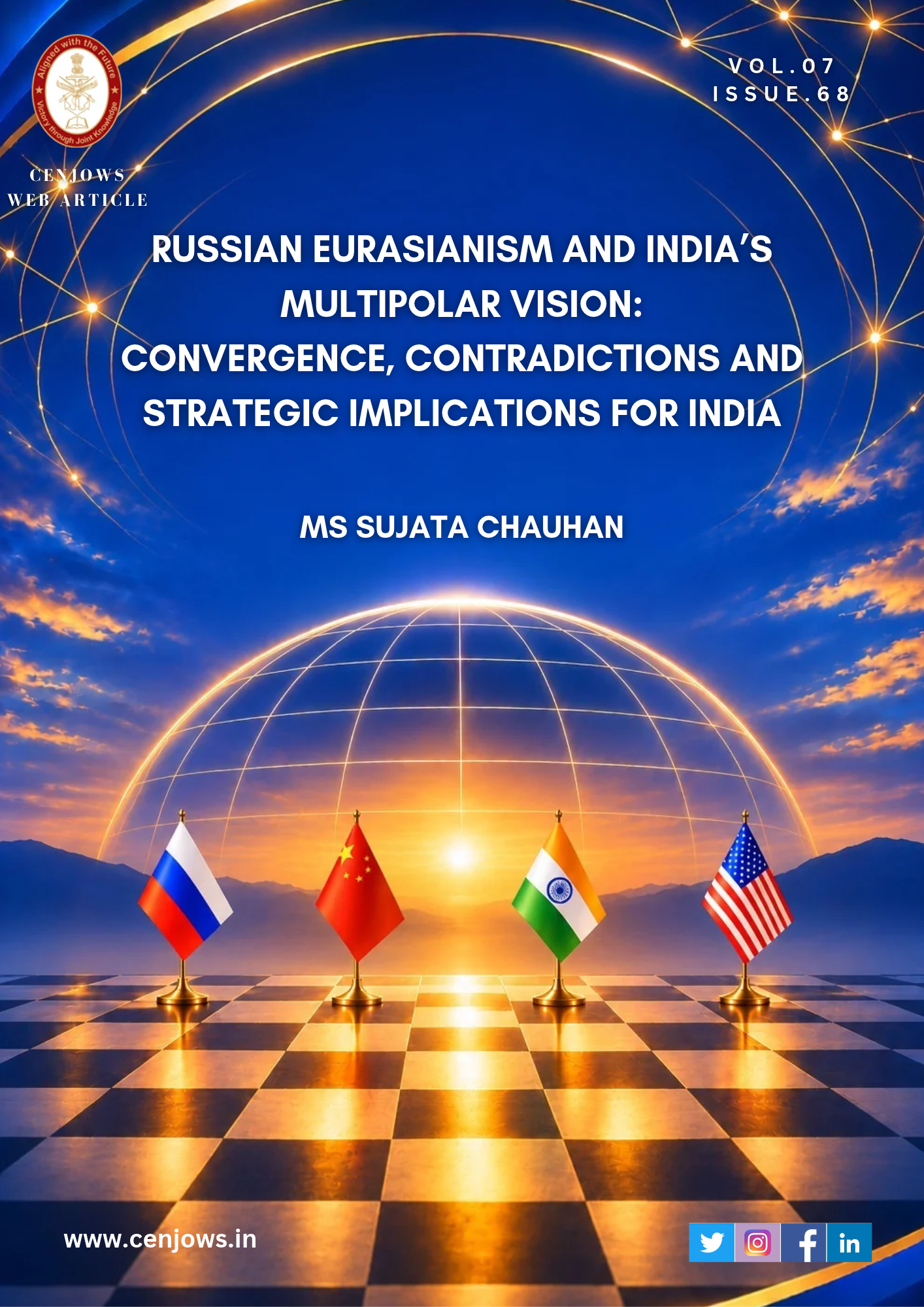
The discourse surrounding the emergence of a multipolar world is at the forefront of global policy debates. In this context, different states have formulated distinct conceptions of what a multipolar order should look like and what it means for their strategic interests. Russia and India both speak of multipolarity, but they do not mean the same thing. In Russia, the idea grew out of Eurasianist thinking, most visibly in Aleksandr Dugin’s work. In India, it has primarily served as a practical tool for keeping options open, as seen in its continued purchase of Russian oil after 2022 while still maintaining ties with the Quad partners. This paper compares the two conceptions: where they overlap, where they split, and what that means for India’s strategic autonomy. The split matters especially now. Russia is leaning heavily on China, while India is working with several major powers at once. If Russia becomes the junior partner in Eurasia, the room India has to manoeuvre changes. This paper therefore traces how changes in Eurasian power dynamics may affect India’s strategic space.
Keywords: multipolarity, Eurasianism, strategic autonomy, India-Russia relations, Indian foreign policy