
Abstract
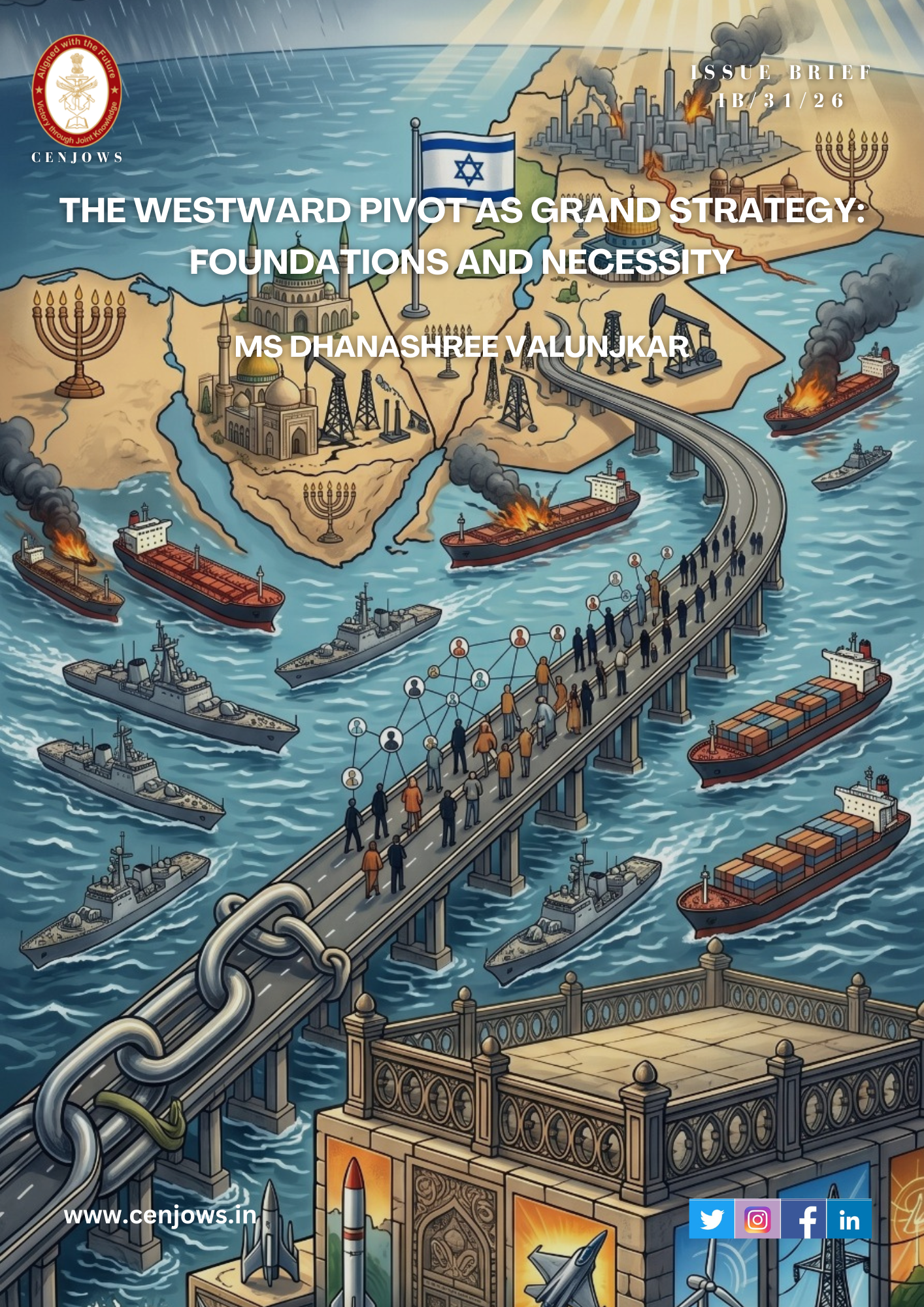
India’s engagement with West Asia has undergone a transformation that transcends incremental policy adjustment. This paper traces the historical arc of India’s West Asia policy from the ideologically anchored posture of the Nehruvian era through Cold War pragmatism, the 1991 systemic rupture, cautious re-engagement under successive governments, and the ‘Look West’ formulation of the Manmohan Singh years, to argue that the post-2014 ‘Link West’ doctrine under Prime Minister Narendra Modi constitutes a qualitative strategic rupture. Drawing on structural realism and the emerging literature on multi-alignment, the chapter demonstrates that this rupture was driven not by ideological preference but by structural necessity: India’s accelerating energy dependence, a nine-million-strong diaspora in the Gulf, maritime vulnerabilities along critical sea lanes of communication, the imperative of counter-terrorism cooperation, and the growing challenge posed by China’s expanding strategic footprint in the region. This paper positions India’s Westward Pivot as an exercise in grand strategy by a rising power, one that seeks not hegemony but the role of a systemic balancer capable of simultaneously engaging rival regional actors. It establishes the foundational logic upon which the paper’s central theme, the ‘Atmanirbhar Guardrail’ doctrine, linking indigenous defence and energy capability to diplomatic resilience, is constructed. The 2023-2026 period of cascading regional crises, from the Israel-Hamas war to Strait of Hormuz tensions, serves as the acid test validating the strategic necessity of this pivot.