
Abstract
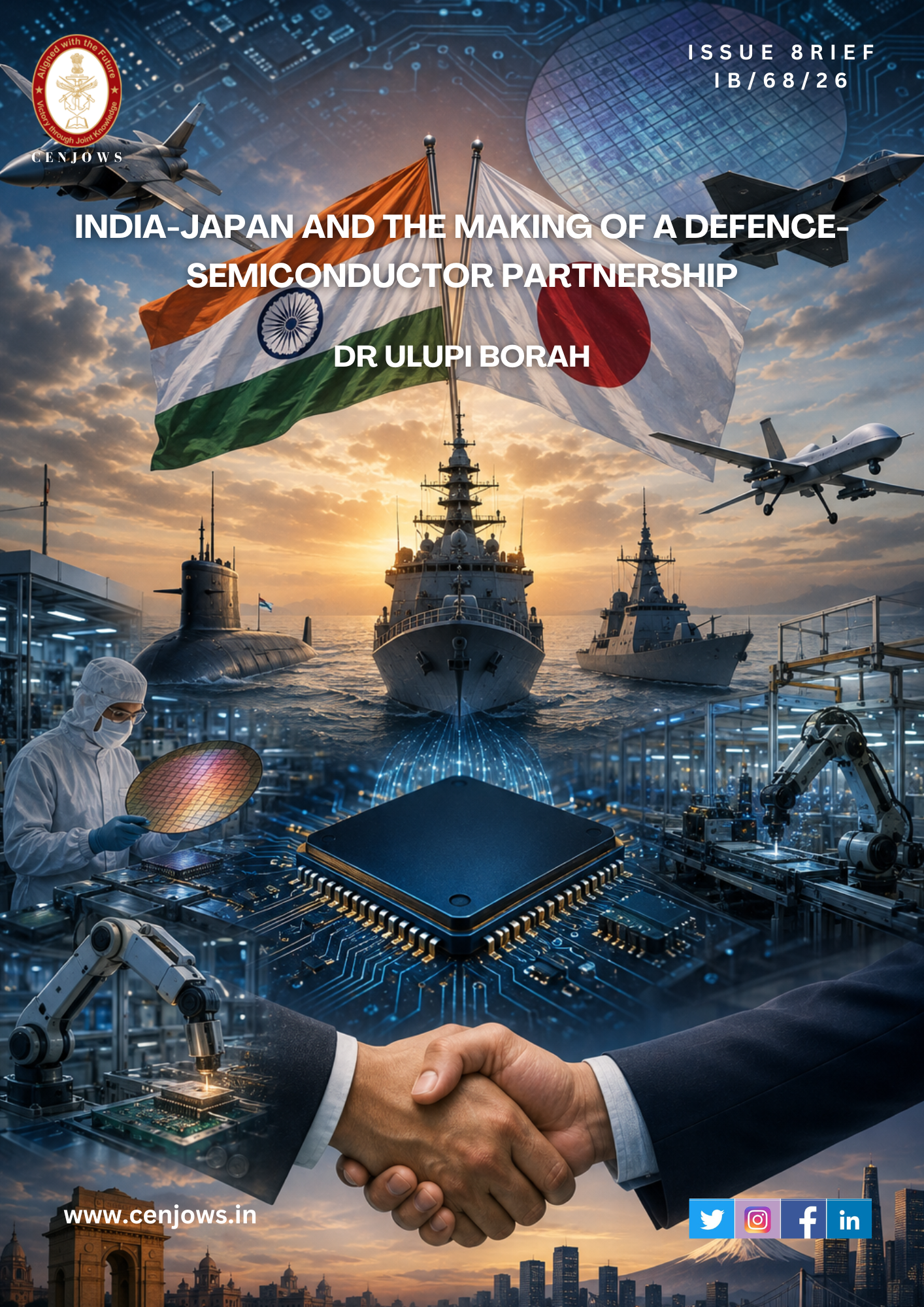
India and Japan bring complementary strengths to the global semiconductor value chain. Japan’s enduring expertise in materials, equipment, and back-end processing meets India’s design talent, fabrication ambition, and expanding policy architecture, including the Design Linked Incentive (DLI) Scheme, the Production Linked Incentive (PLI) Scheme, the India’s Semiconductor Mission (ISM) 2.0, and the National Critical Mineral Mission (NCMM) ensures that neither country enters this partnership from a position of established dominance. Japan’s competitive displacement from a once-dominant position and India’s decades of policy inconsistency implies that their relationship rests on genuine complementarity rather than dependency. This chapter traces how that relationship has matured rapidly, from a 2023 Memorandum of Cooperation into a full economic-security architecture by 2026, while its defence-specific dimension remains underdeveloped. Drawing on rare earth supply chains, private-sector partnerships, and platform-level defence cooperation, the chapter identifies intellectual property sharing as one of the factors separating this civilian depth from its latent military-application potential and proposes concrete policy measures to close that gap.