
Abstract
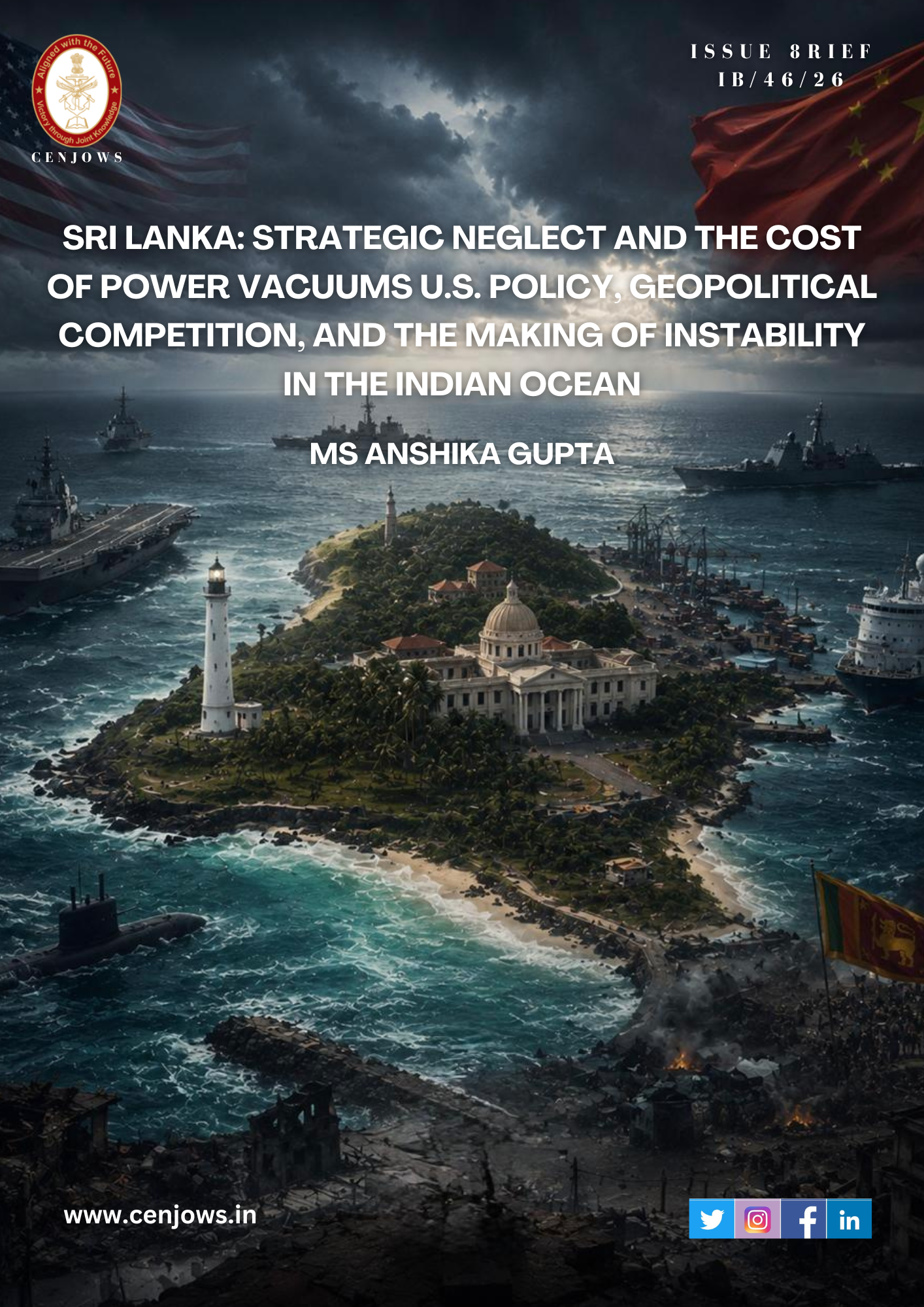
Sri Lanka’s post-civil war trajectory, involving the end of the Liberation Tigers of Tamil Eelam (LTTE) insurgency in 2009 through the catastrophic economic collapse of 2022, offers a compelling and underexamined case study in how strategic neglect, geopolitical competition, and external policy pressures combine to exploit power vacuums. The paper argues that U.S. foreign policy toward Sri Lanka, which was pursued along the twin tracks of human rights conditionality and counterterrorism integration under the Global War on Terror (GWOT) framework, had structural repercussions that neither Washington nor its regional allies fully anticipated. U.S. pressure forced Sri Lanka to strengthen its financial and geopolitical ties with the People’s Republic of China by diplomatically isolating Colombo during the crucial post-war era. The 2019 Easter Sunday bombings were the result of transnational extremist networks that eventually made their way to Sri Lanka due to the wider ideological spillovers of U.S.-led actions in the Middle East. The anatomy of Sri Lanka’s strategic vacuum, the direct and indirect contributions of U.S. policy to its expansion, India’s inability to compensate with intelligence and diplomatic resources, infrastructure, and the ensuing geopolitical rearrangement are all examined in this paper. Finally, it offers structural insights for the Indian Ocean Region’s (IOR) regional security architecture.