
Abstract
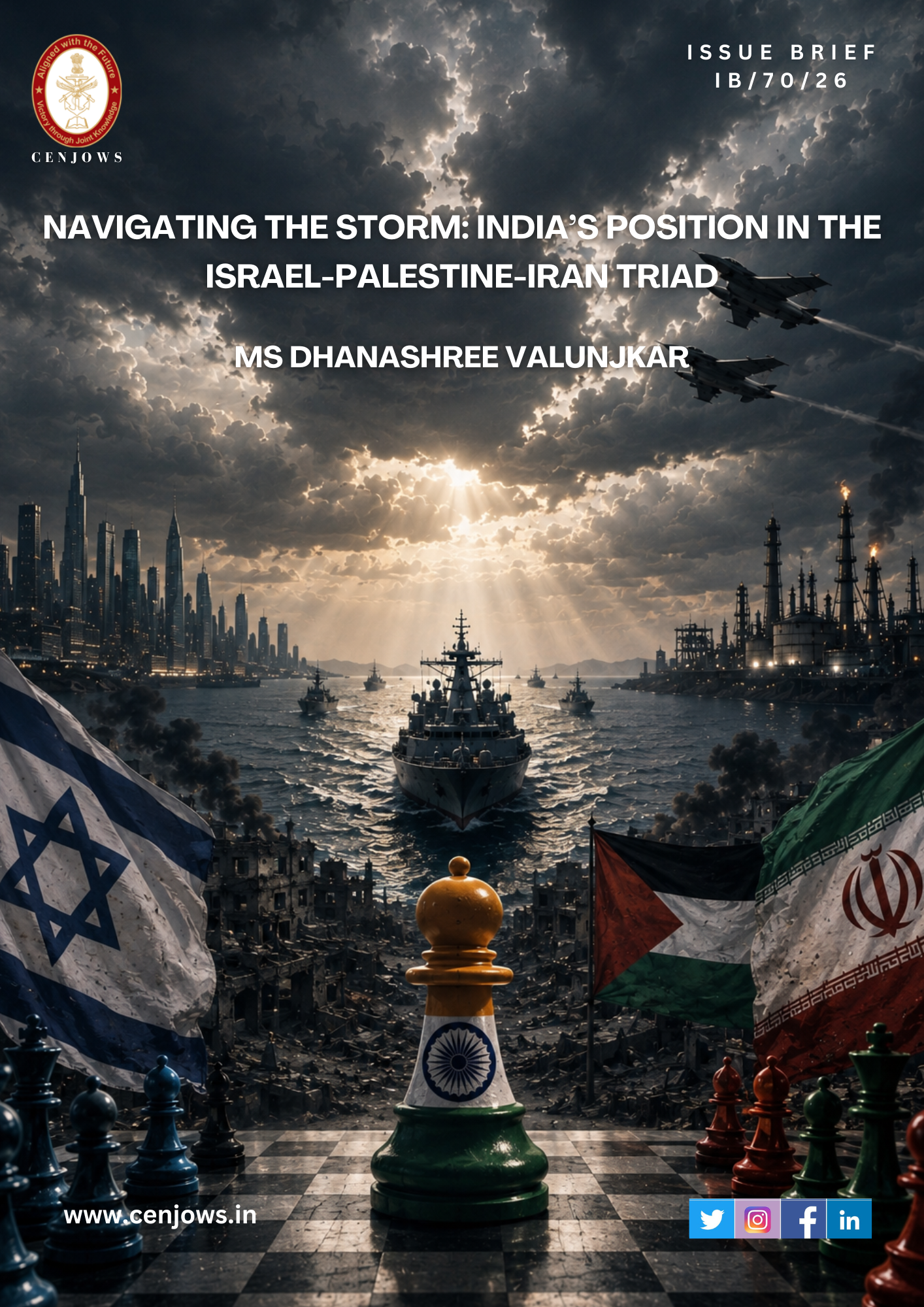
The 2026 war on Iran did to India’s West Asia policy what no white paper could: it converted a set of doctrinal assumptions into a live test. When United States and Israeli strikes killed Iran’s Supreme Leader on 28 February 2026, and Tehran responded by restricting and then closing the Strait of Hormuz, India found its two most cherished regional propositions, that it could hold Israel, Iran and the Arab Gulf in simultaneous embrace, and that its energy lifeline could be secured without alignment, placed under direct strain. This paper argues that India’s conduct during the crisis marks the maturation of its West Asia posture from reactive energy diplomacy into a structural commitment to maritime security provision, and that the two are causally linked. The diplomatic balancing that let New Delhi to keep channels open to Jerusalem, Tehran and the Gulf simultaneously was not sustained by rhetoric; it rested on the material capacity to protect its own shipping at the region’s decisive chokepoint. Drawing on the classical theory of sea power and the chokepoint, on the literature concerning strategic autonomy and multi-alignment, and on the empirical record of Operation Sankalp and its dedicated successor Operation Urja Suraksha, the paper reconstructs the maritime response and reads it as the operational core of India’s balancing act. It then traces the crisis into its second, harder phase, contested reopening, mined waters and Iranian transit charges, and identifies three structural fragilities that condition the model’s durability, closing with six recommendations for the strategic and naval-policy community.