
Introduction
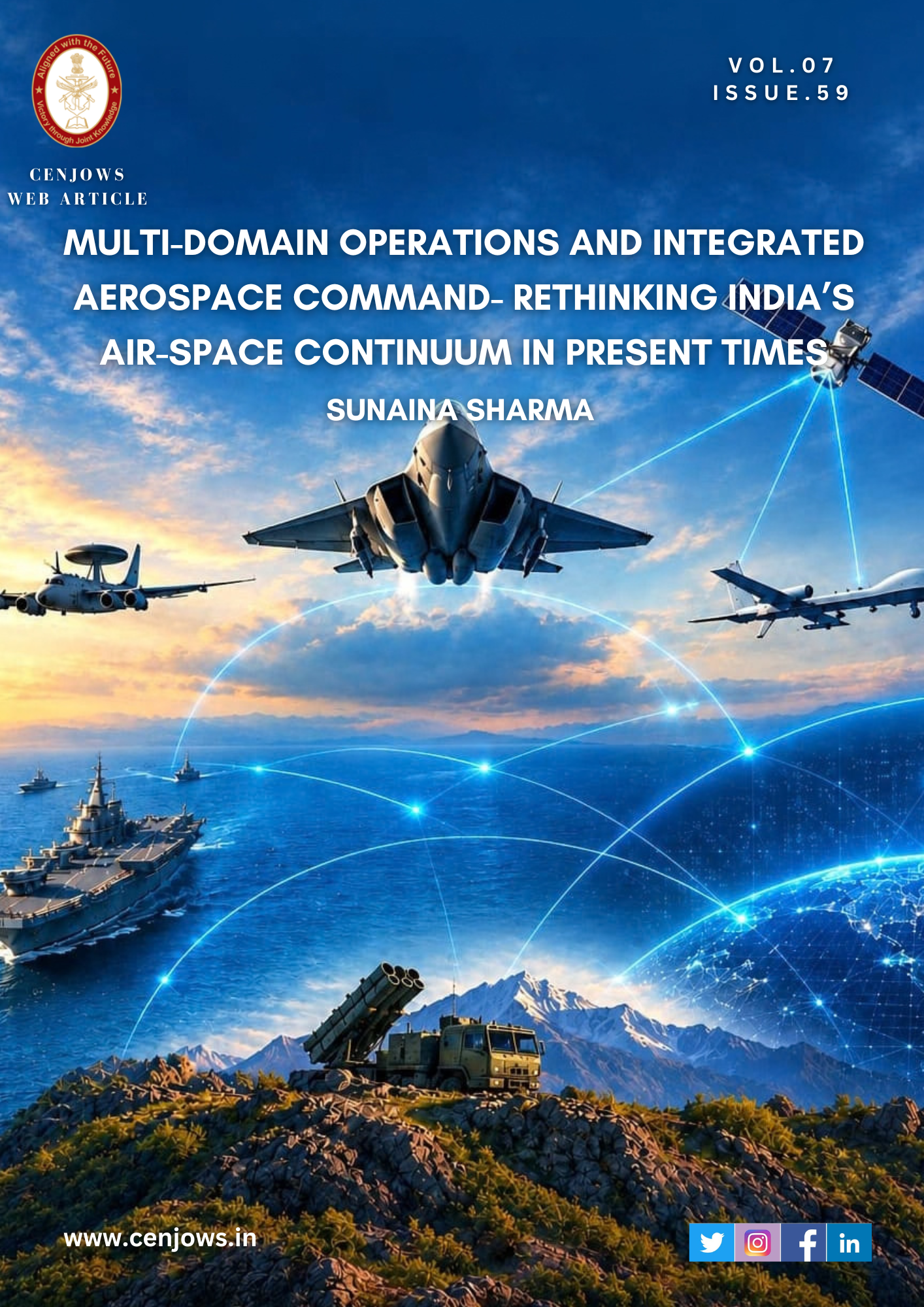
The traditional distinction between physical domains is being outpaced by advanced technologies. This has transformed the nature and character of warfare. Contemporary combat zones are not restricted to armed coercion on land, sea, air, and space. In order to successfully conduct modern military operation, the cognitive and information domains acts alongside these traditional domains. The inclusion of all the domains and unification of capabilities optimises the strategic potential of the forces. This integration enables and drives the Multi-Domain Operation (MDO). The execution of MDO relies on cross-domain synergy, integrated communication systems, coordinated kinetic and non-kinetic systems and various other systems. The integration of the command architecture remains an essential element for the effective synchronisation of the forces. India’s security structure has long been defined by its ‘two-front’ threat perception. The recent breakthroughs in China and Pakistan’s military engagements particularly regarding capabilities in the aerospace sector, Intelligence Surveillance Reconnaissance (ISR), precision attack capabilities, anti-access and area denial systems, electronic warfare systems, cyberspace assets etc has become a concern for India. In order to deal with the ‘two-front’ threats and a collusive threat it is indispensable for India to modernise and restructure its force architecture. The Operation Sindoor marked a pivotal moment in India military responses. It was characterised by coordinated, synchronised and integrated tri-service military forces. This was achieved through gradual and contentious structural integration of the forces for MDO. The paper seeks to explore the inter-relation between an integrated aerospace command and multi-domain operations for India. It also examines the Defence Space Agency (DSA) of India and People Liberation Army Aerospace Force (PLAASF) of China and their force structure. It discusses India’s security architecture exhibits constrains in terms of an integrated aerospace command. The study concludes that in order to protect India’s security interests, it should commence structural reforms for an integrated aerospace command for seamless MDO execution amid adversaries’ aerospace capabilities.