
Introduction
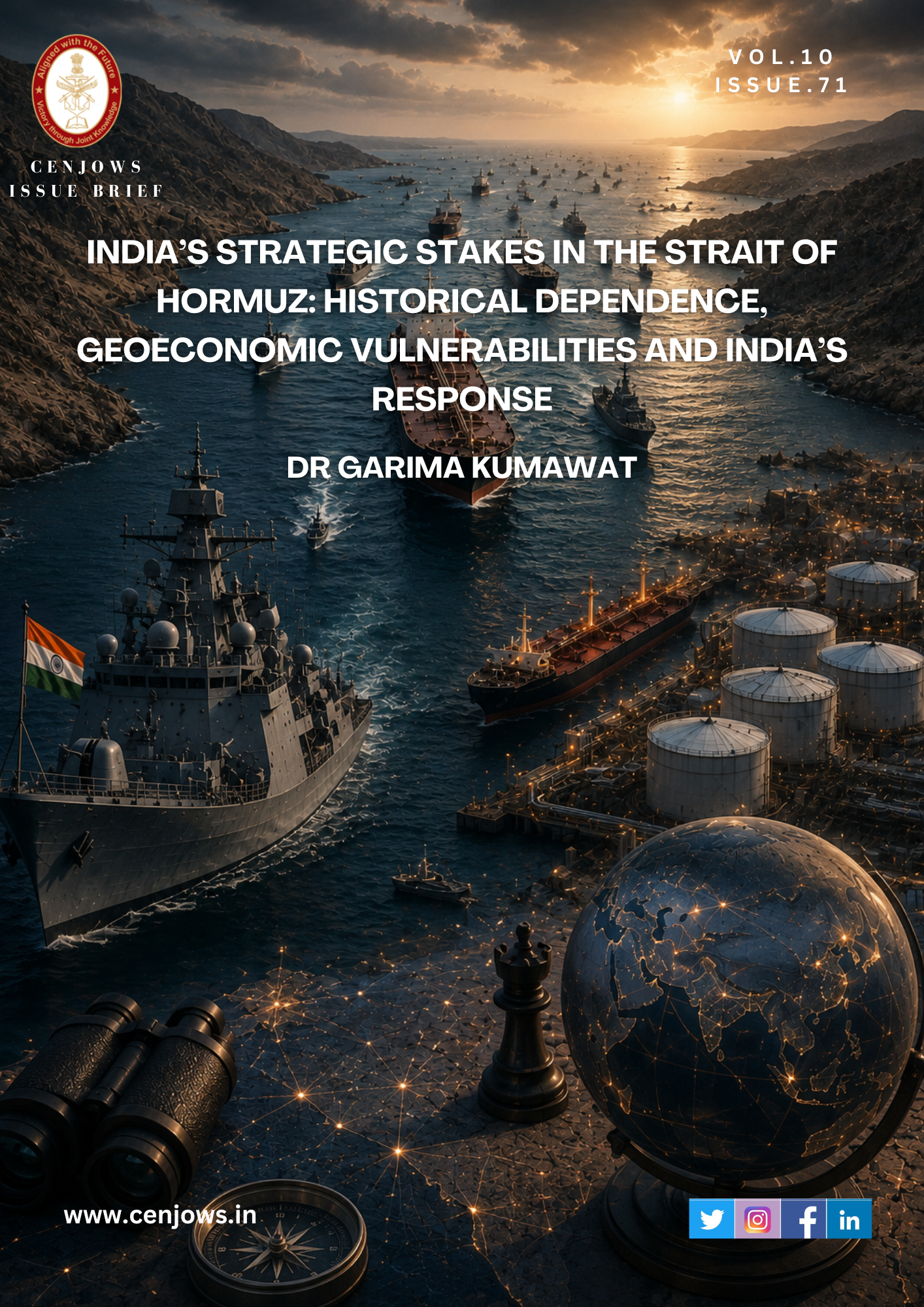
Over the decades, the Persian Gulf and the Strait of Hormuz (SoH) have been playing a crucial role in providing energy resources for the sustained growth and development of major emerging and developed economies of Asia, Africa, Europe and beyond, carrying a substantial share of global energy trade. A significant volume of India’s energy imports from and exports to the Persian Gulf are also dependent on continuous navigation through this narrow waterway, making it crucial for India’s economic resilience and Maritime strategy in the region. Any instability or even the threat of instability in and around this strait can lead to disruptions in the global oil markets, leading to higher freight charges, insurance premiums, massive fluctuations in the trading markets, and surging inflation, making it a region of international concern. With tensions escalating between the US and Israel on one side and Iran on the other, West Asia has become a geopolitical fulcrum, where its criticality is shaped by regional conflicts, great power competition, heavy militarisation, and maritime trade interests rather than just being an energy transit chokepoint. These myriad and complex issues have massive spillover effects on countries like India, making it one of the most critical determinants of its economic and strategic security.