
Introduction
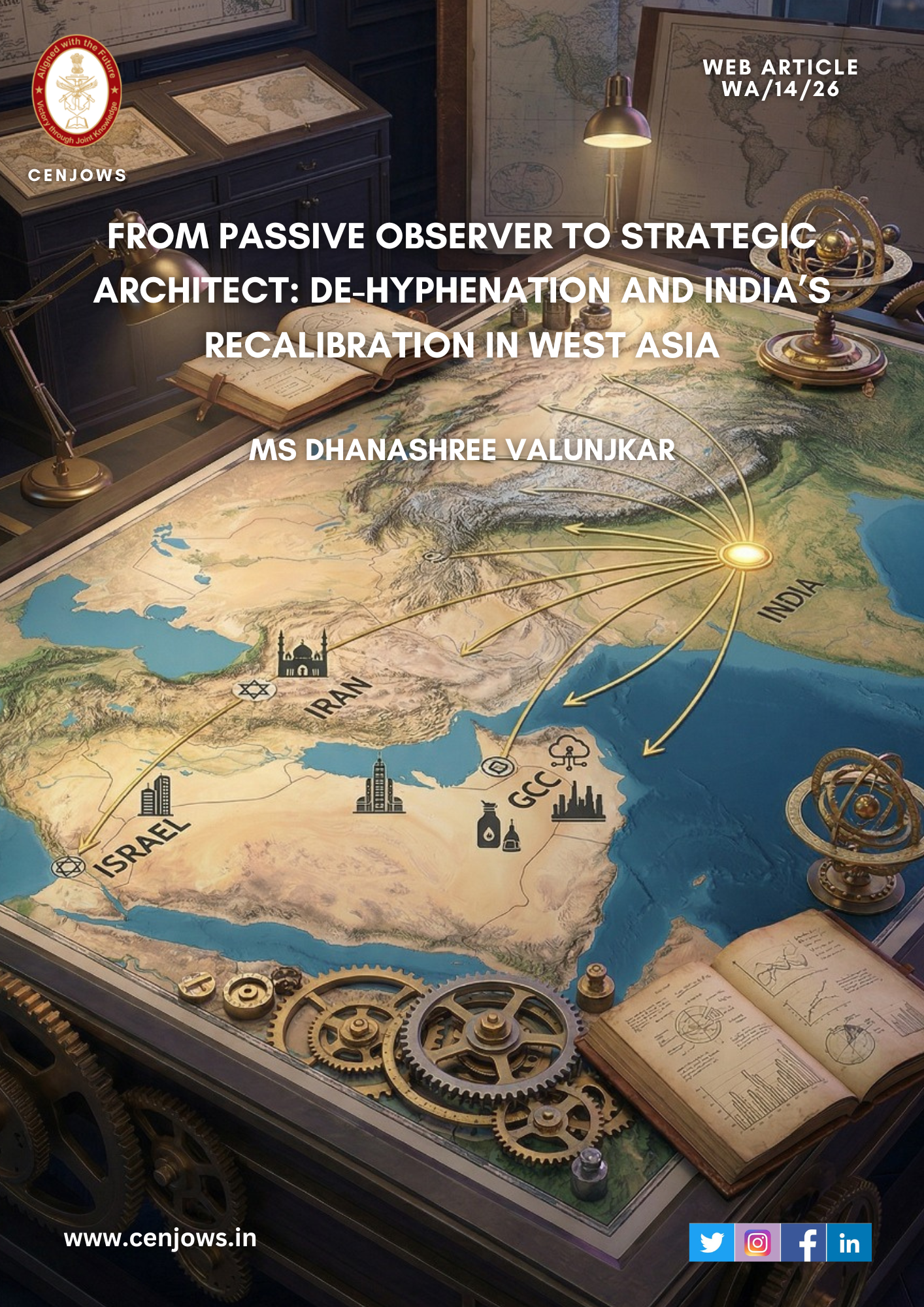
India’s foreign policy in West Asia is unquestionably one of the most difficult tightropes in contemporary geopolitics. Israel, Iran, and the Gulf Cooperation Council (GCC) states are the three groups of actors with whom New Delhi has had to maintain cooperative relations despite their long-standing animosity.
For much of its post-independence history, India overcame this obstacle by implementing a policy of strategic flexibility, such as importing Gulf hydrocarbons while maintaining a careful distance from Iran, openly endorsing the Palestinian cause while secretly obtaining state-of-the-art defence technology from Israel, and coordinating its statements to minimise offence to any one party. On the outside, the outcome seemed successful, but in reality, India had very little actual influence over the region, and all of its partners were hardly satisfied.
However, India has drastically altered this strategy since 2014. The deliberate choice to treat New Delhi’s relations with Iran, Israel, and the GCC countries as separate, parallel tracks rather than as a single, interconnected issue is known as de-hyphenation. Instead of viewing each bilateral relationship through the prism of the others, this framework evaluates each one according to its own strategic merits. This paper defines de-hyphenation, explains its construction, and discusses its importance. The doctrine’s ability to survive the largest test to date, the ongoing conflict between the US, Israel, and Iran, is then evaluated. It also examines the material underpinnings of this diplomatic architecture’s structural resilience, which are based on India’s expanding domestic capabilities.