
Abstract
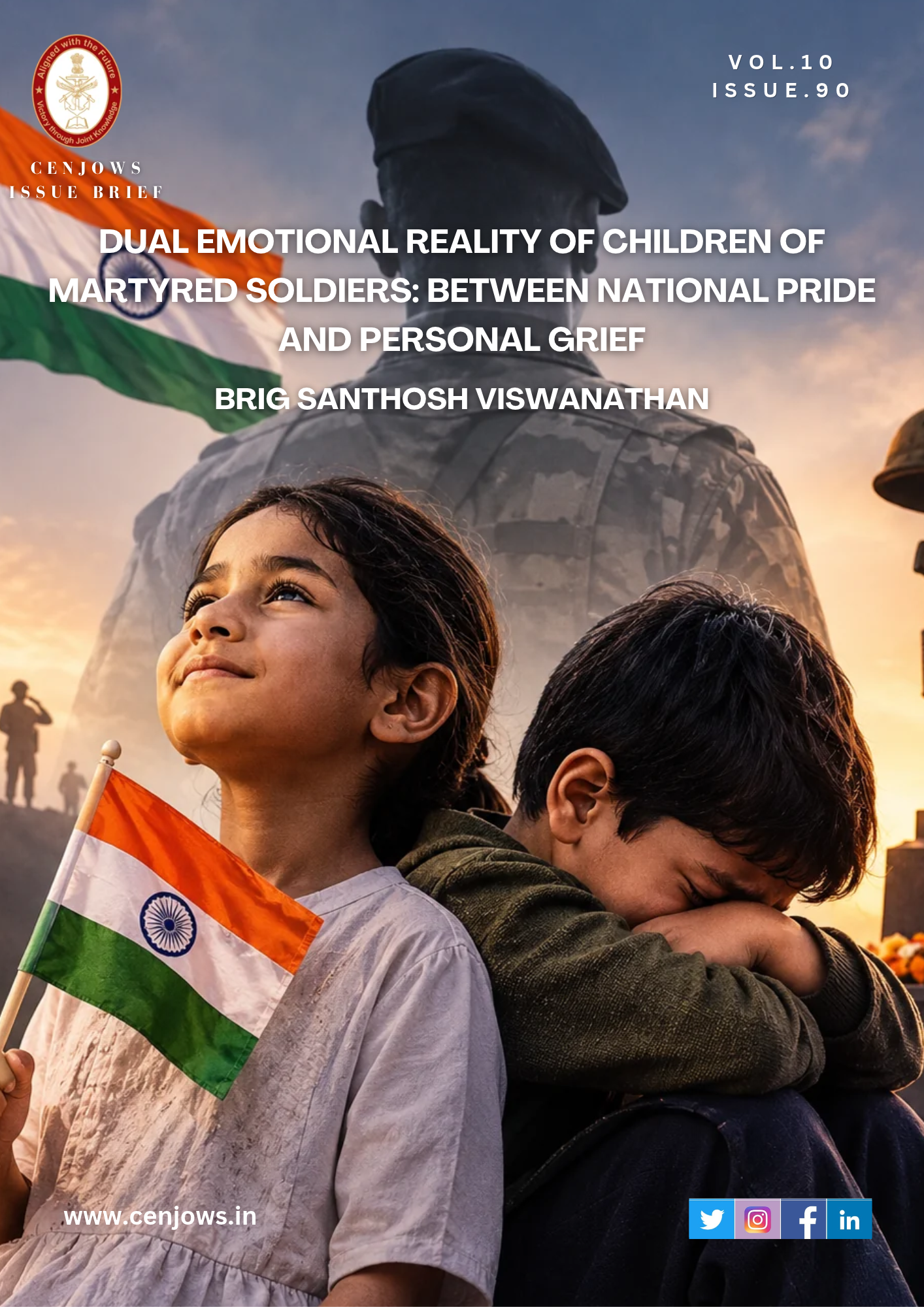
Military Martyrdom refers to the Supreme Sacrifice made by Armed Forces personnel who lay down their lives in the line of duty, commemorated for their bravery, courage and selfless service to the nation. While they are commonly referred to as ‘Martyrs’ or ‘Shaheed’ (in Hindi), the official military terminology classifies such a loss either as a ‘Battle Casualty’, when the soldier is killed in action or in operations against the enemy, or as a ‘Physical Casualty’, when he dies while in service due to other causes such as accidents, training mishaps or illness. Either way, the soldier attains martyrdom, because he lived and ultimately gave his life under the oath to defend his country. More importantly, once the sacrifice is made, the emotional effect on the children he leaves behind is just the same. These children grow up in a ‘dual emotional reality’, where society celebrates their father as a national hero while they privately mourn the loss of a parent. This article examines the concept of dual emotional reality and the conflict between national pride and personal grief, analyses its psychological, emotional and developmental impact on children and proposes remedial measures at the family, school, society and state levels. It concludes by recommending a multi-level integrated resilience model, functioning at the national and state levels as a single window clearance system, that brings together serving and retired Armed Forces personnel and civilians to provide sustained emotional and psychological support.