
Introduction
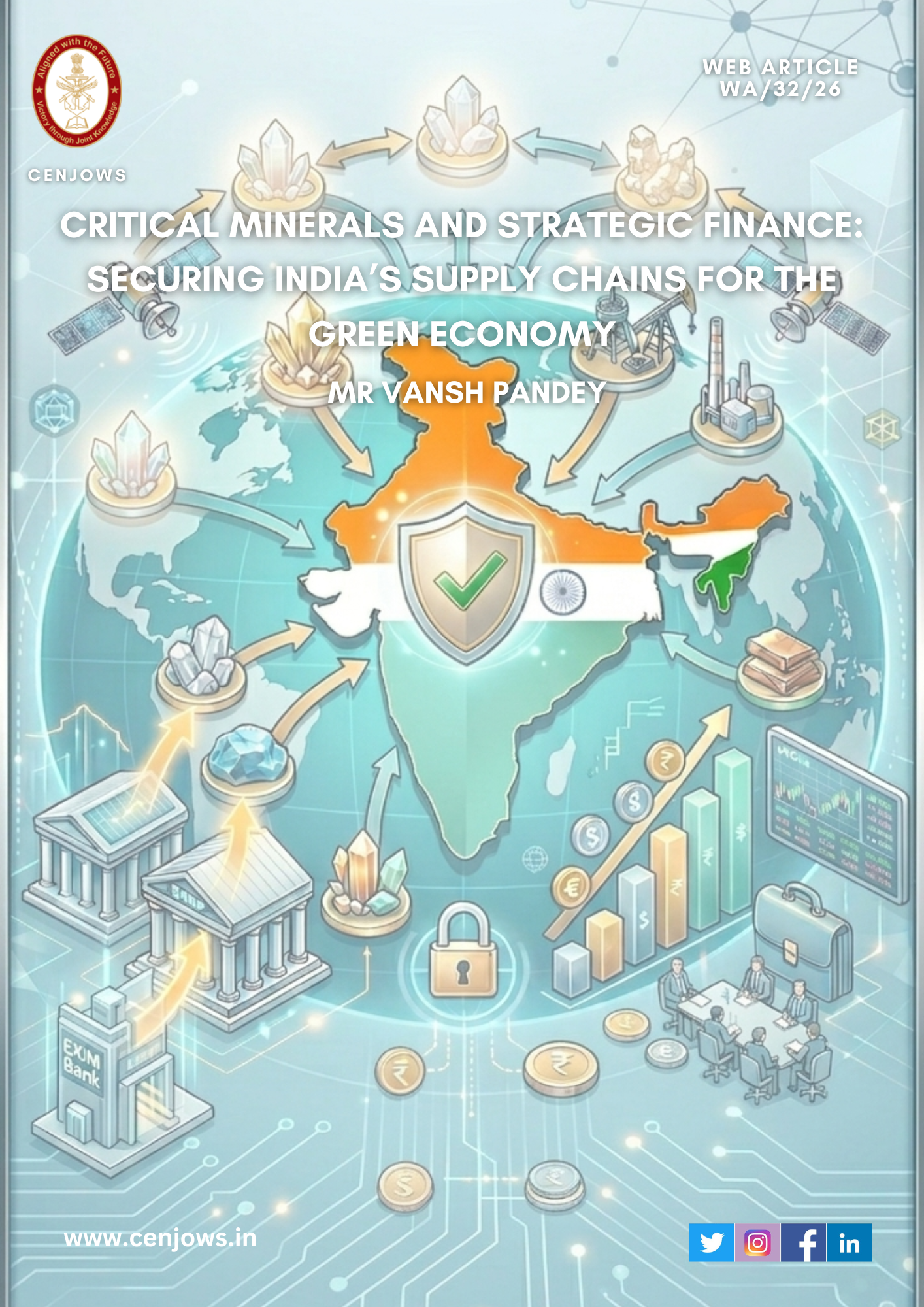
The transition from a traditional economy to a green economy is transforming the global economic and geopolitical landscape. In the twentieth century, industrial and political power were closely linked with the availability of oil and fossil fuel resources. However, in the twenty-first century, critical minerals have emerged as the foundation of technological advancement, renewable energy systems, electric mobility, and digital infrastructure. Minerals such as lithium, cobalt, nickel, graphite, copper, and rare earth elements are considered essential natural resources parallel to oil energy production, such as manufacturing batteries, solar panels, wind turbines, semiconductors, and also for advanced defence technology needs. As countries take initiatives to combat climate change and reduce carbon emissions, competition over these minerals is intensifying. India is considered one of the world’s fastest-growing economies in the modern world, with a 7% growth rate over the past five years on an average. Along with economic growth, the country also aims to achieve clean energy transition and sustainable industrial growth. The country aims to achieve net-zero emissions by 2070 through the expansion of renewable energy capacity building. To promote electric vehicles, the country also plans to become a major hub for electric vehicle manufacturing and battery production. However, these targets depend heavily on the availability of critical minerals. India currently imports a considerable portion of its essential resources, making the country vulnerable to global supply disruptions, geopolitical tensions, and price volatility. In this situation, securing critical mineral supply chains can help the country move towards economic security, energy security, and strategic autonomy.