
Abstract
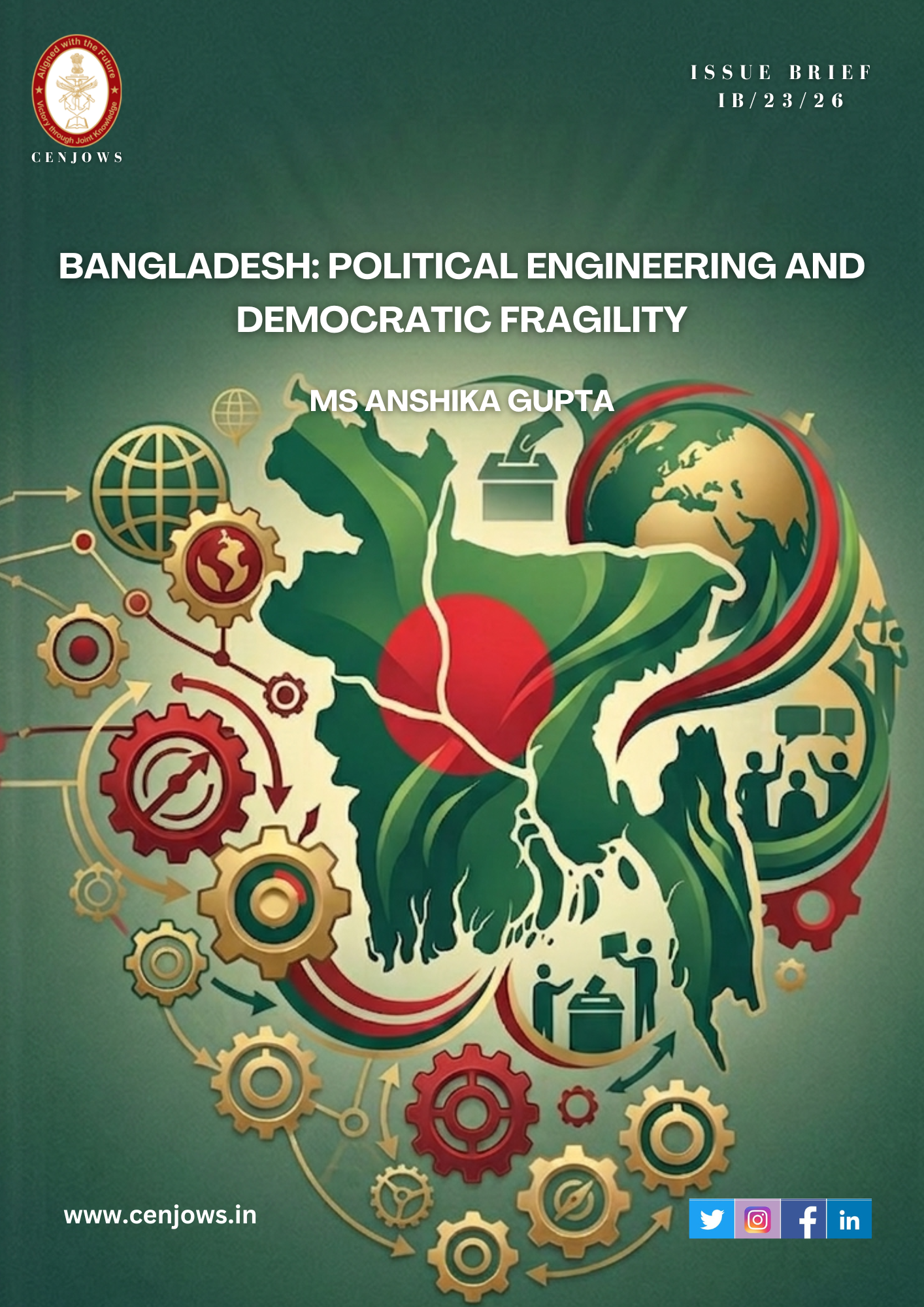
Bangladesh occupies a strategically critical position in South Asia, sitting at the convergence of South Asian and Southeast Asian geopolitical dynamics. Over the past five decades, its political trajectory has been shaped not merely by the intensities of domestic contestation but by intersecting currents of external strategic competition, economic engineering, and security frameworks associated with United States-led global interventions. This paper examines how Bangladesh’s democratic institutions, political economy, and security orientation have been progressively shaped and, in key respects, distorted by broader international structures. The paper further illustrates with empirical specificity how U.S. intervention through the Global War on Terror (GWOT) produced tangible proxy dynamics, non-state actor proliferation, and covert financing networks that continue to jeopardise regional stability, using the theoretical lens of state fragility as an externally constituted condition. The study makes the case that understanding the nation’s vulnerabilities requires placing them in the context of the systemic forces of the global security and economic order, including the strategic fallout from American military and political intervention in South Asia. This paper also highlights the implications of these dynamics for India’s national defence doctrine, the security of its northeastern states, and its strategic calculations in the Bay of Bengal.
Keywords: Bangladesh; India; Proxy Wars; Non-State Actors; Indo-Pacific