
Abstract
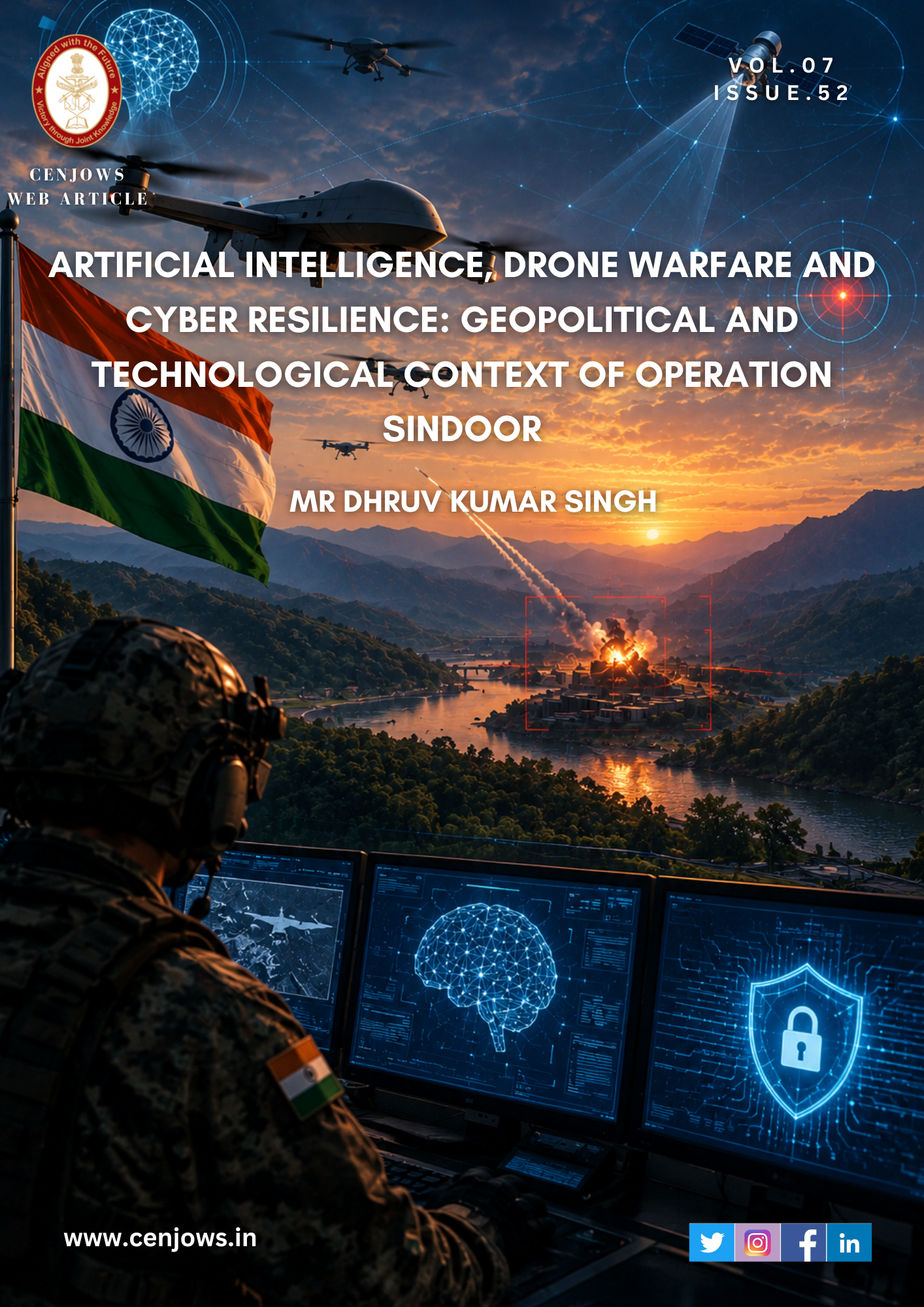
Operation Sindoor, which was India’s May 2025 tri-service response to the Pahalgam terror attack. And also offered a rare public window into how artificial intelligence, unmanned systems, and cyber resilience are converging within Indian military doctrine. This article situates the operation within that wider convergence: it examines what is publicly verifiable about Sindoor’s intelligence-led, precision-oriented execution; surveys how AI, drone systems such as the indigenous DRDO D4 platform, and cyber-resilience institutions like CERT-In and the Defence Cyber Agency are being folded into Indian defence planning, and traces the doctrinal follow-through visible in PRAHAAR, the Ministry of Home Affairs’ February 2026 National Counter-Terrorism Policy. Drawing on classical strategic thought alongside contemporary defence and technology literature, the article argues that India’s post-Sindoor operational reality is defined less by any single new capability than by the attempted fusion of jointness, technological modernisation, and codified doctrine into a coherent whole-of-government posture—a fusion whose depth remains difficult to verify from open-source material alone.