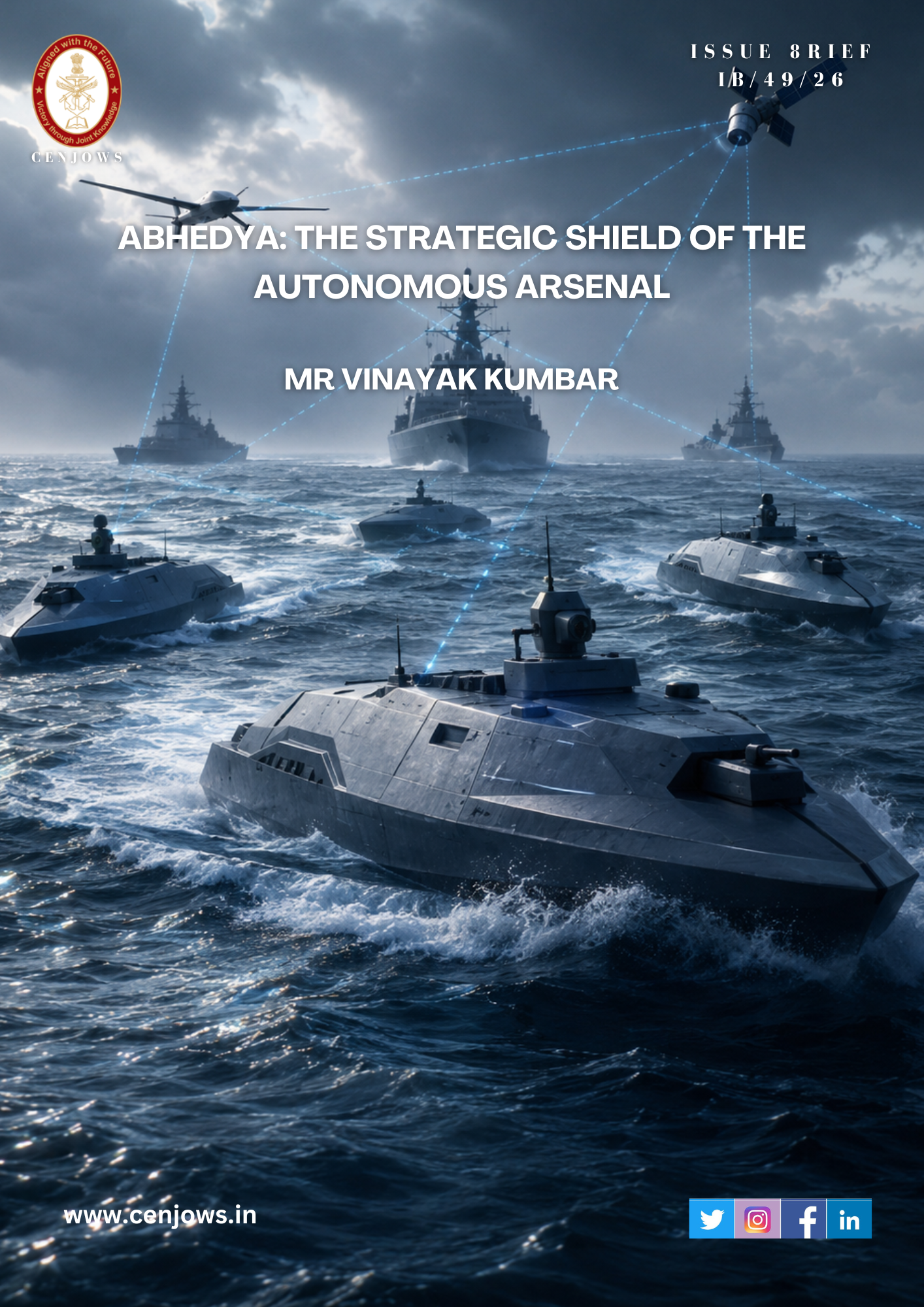

This paper is an attempt to examine the emerging role of Large Unmanned Surface Vehicles (LUSVs) within the broader framework of Distributed Maritime Operations (DMO). It argues that these platforms are evolving from being an auxiliary asset into critical nodes of a distributed sensor-to-shooter kill web. When equipped with artificial intelligence, autonomous navigation, modular payloads, resilient communications, and advanced weapon systems, LUSVs could enable manned fleets to operate out of hostile engagement zones whilst projecting combat power into contested waters. An emphasis is also placed on the ‘sacrificial shield’ concept. Here the unmanned vessels that are equipped with Directed Energy Weapons (DEWs), electronic warfare suites and decoy signatures absorb or neutralise incoming threats before they can strike high-value manned assets. Drawing an inspiration from the Mahabharata, Ghatotkacha’s calculated sacrifice is interpreted as an early example of deceptive deterrence, where expendable platforms compel the adversary to prematurely exhaust critical capabilities on suboptimal targets. The paper further evaluates India’s evolving unmanned maritime ecosystem under the iDEX framework and argues that indigenous LUSV development will be central to enhancing deterrence, survivability, and operational persistence in the Indian Ocean Region.