
Abstract
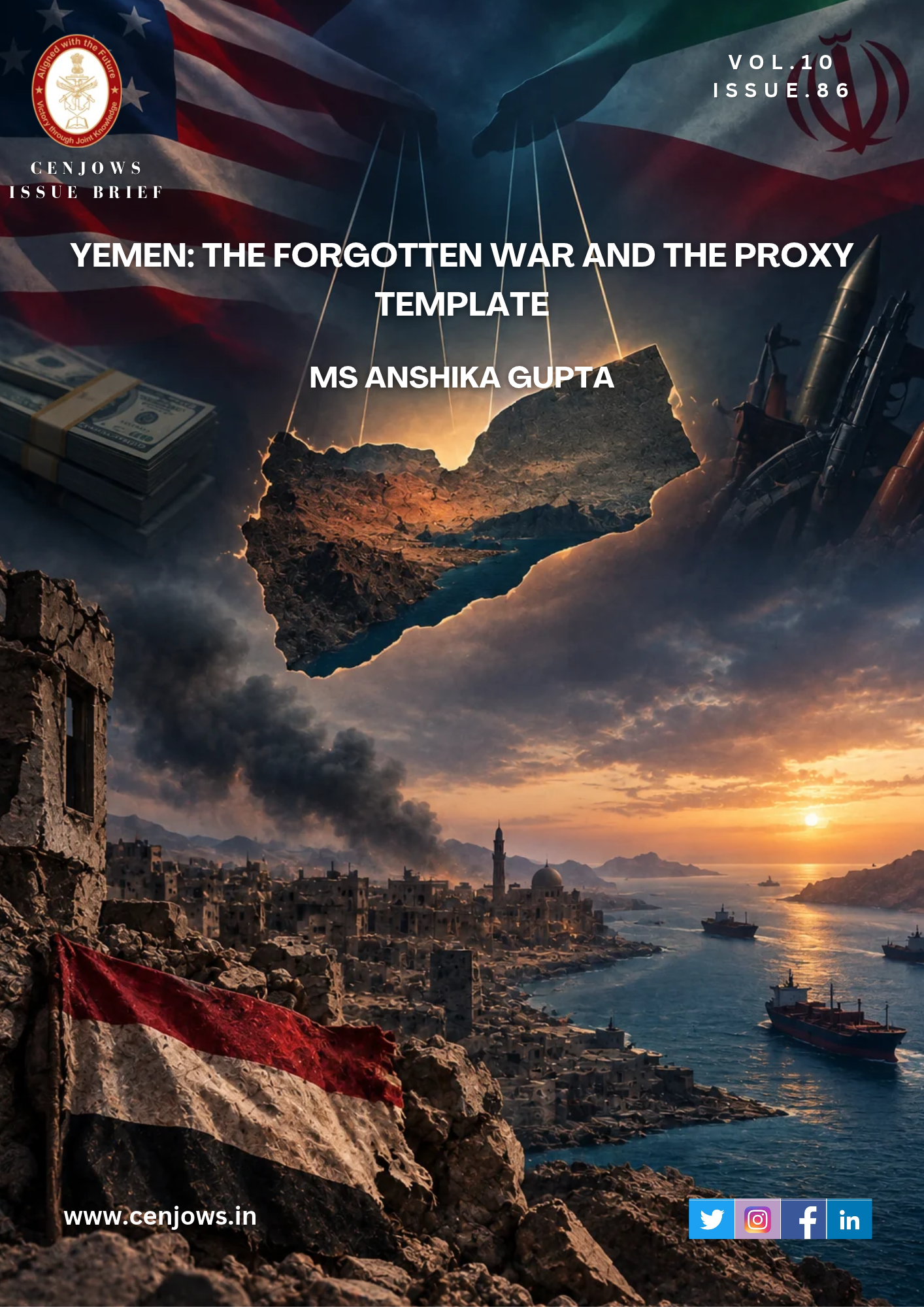
Yemen’s civil war, now in its second decade, has functioned as a template through which regional and extra-regional powers have contested influence in the Arabian Peninsula without engaging one another directly. The paper examines how a Saudi-led, United States-backed coalition and Iran-aligned Houthi forces produced a protracted stalemate that devastated Yemen’s state capacity while converting the Bab-el-Mandeb Strait into one of the world’s most contested maritime chokepoints. It situates the conflict within the broader analytical literature on proxy warfare, traces the pattern and limits of U.S. involvement and assesses the humanitarian and strategic costs borne by Yemen itself. The paper then turns to India’s stakes in this conflict: the 2015 evacuation of over 6,700 nationals in Operation Raahat, the Indian Navy’s sustained anti-piracy and maritime security presence in the Gulf of Aden, and New Delhi’s calibrated, non-aligned diplomatic posture toward both Riyadh and Tehran. It argues that Yemen offers a cautionary template for how an internal political crisis, once internationalised, can generate durable maritime insecurity with direct consequences for India’s energy security, trade and diaspora welfare and that India’s response anchored in the Security and Growth for All in the Region (SAGAR) doctrine and an independent naval posture offers a viable model of rule-based order amid great-power and regional rivalry.
Keywords: Yemen, India, Maritime chokepoints, Operation Raahat