
Abstract
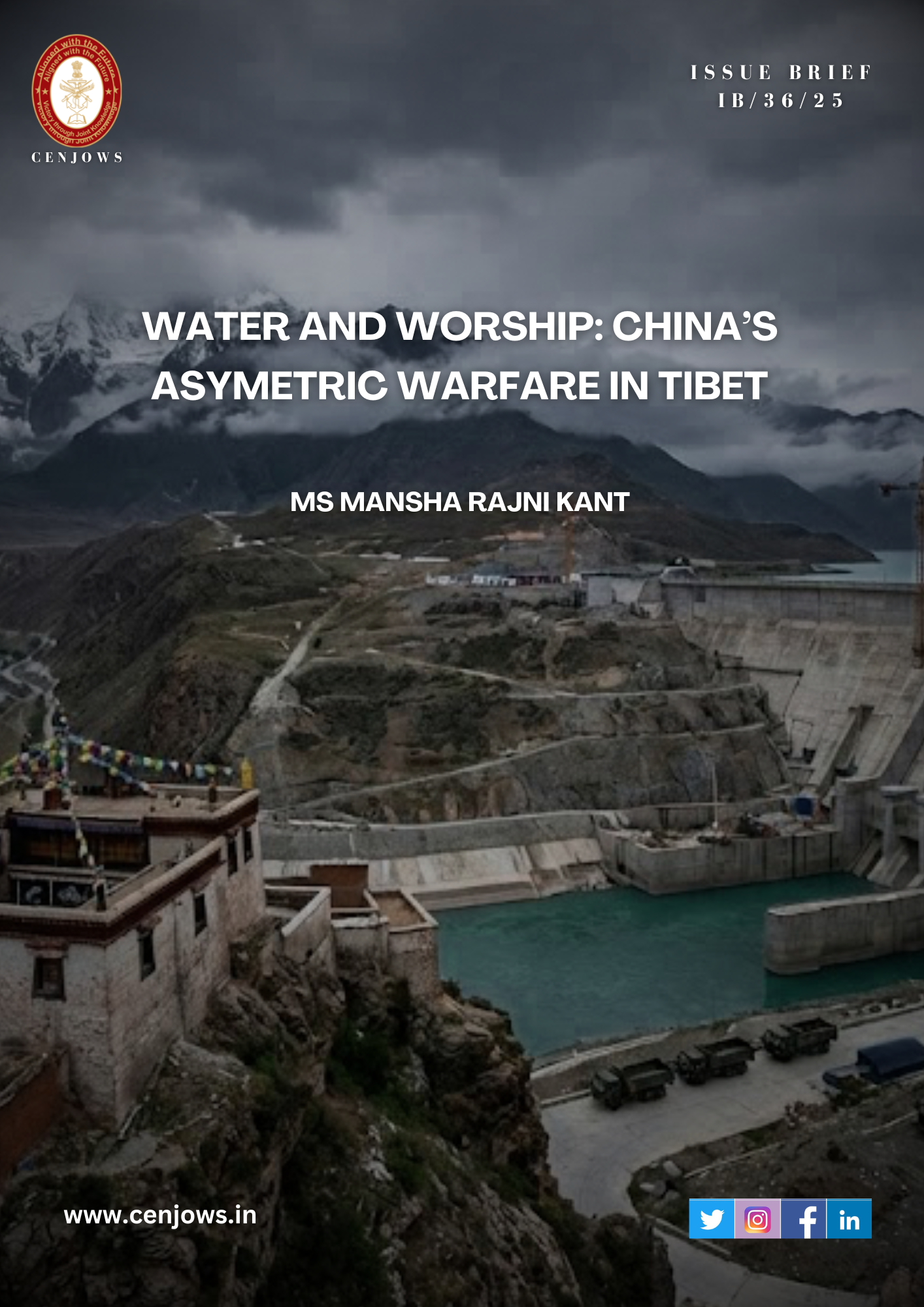
India-China tensions are often viewed through the lens of border standoffs, military incursions, and economic rivalry. However, two largely overlooked fronts are emerging as silent but potent theatres of conflict: the Sinicisation of Tibetan culture and the militarisation of transboundary rivers originating from the Tibetan plateau.1 This raises the central question: in what ways does China’s dual control over Tibetan culture and rivers redefine India’s strategic vulnerabilities. This paper argues that these two seemingly disparate processes are strategically interlinked. China’s suppression of Tibetan identity through linguistic assimilation, religious control, systematic and ideological surveillance has enabled expansive hydrological engineering.2 These two fronts form a coordinated asymmetric strategy aimed at consolidating territorial control, exerting regional leverage, leading to the gradual diminishing of India’s spiritual, ecological and geopolitical influence. Recognising and responding to these fronts is imperative for India’s long – term strategic posture.