
Abstract
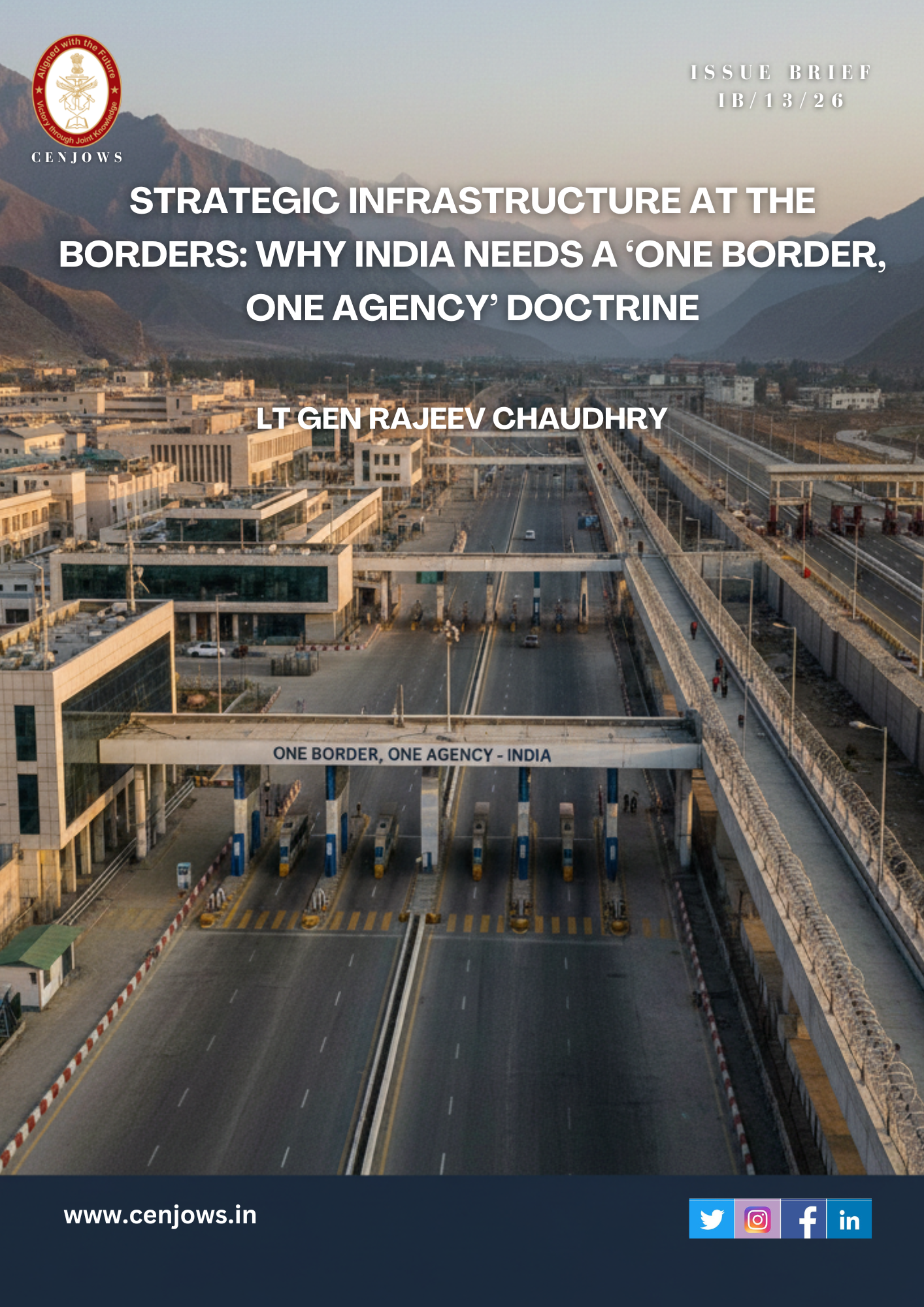
The violent confrontation in the Galwan Valley in June 2020 became a defining moment in India’s approach to border security. It exposed significant gaps in infrastructure and underscored that roads, bridges, tunnels, and logistics networks are not peripheral enablers but foundational elements of defence, deterrence, and sustained presence. In the years that followed, India accelerated construction across its frontiers, supported by firm political commitment and enhanced financial allocations. However, the pace of progress has remained uneven. Fragmented execution, overlapping mandates, and varying standards across multiple agencies have continued to impede consistent outcomes.
This Issue Brief contends that the next phase of reform must extend beyond mere acceleration in speed and scale, and instead address governance architecture. The proposed ‘One Border, One Agency’ doctrine provides a structured solution: the Central Public Works Department would assume responsibility for the Western border with Pakistan; the Border Roads Organisation would lead along the Northern frontier with China; and the National Highways and Infrastructure Development Corporation Limited would oversee the Eastern borders and most of the North Eastern states, subject to defined exceptions. Aligning agencies with terrain conditions, operational demands, and the primary security forces in each sector would reposition them from construction executors to integrated partners in border management. By institutionalising sector-specific responsibility, the doctrine enhances accountability, promotes standardisation, and deepens civil–military coordination, thereby elevating infrastructure into a durable instrument of mobilisation, deterrence, and national power.
Keywords: Strategic Infrastructure; Border Management; Post-Galwan Reforms; Infrastructure Governance; One Border, One Agency; Border Roads Organisation (BRO)