
Abstract
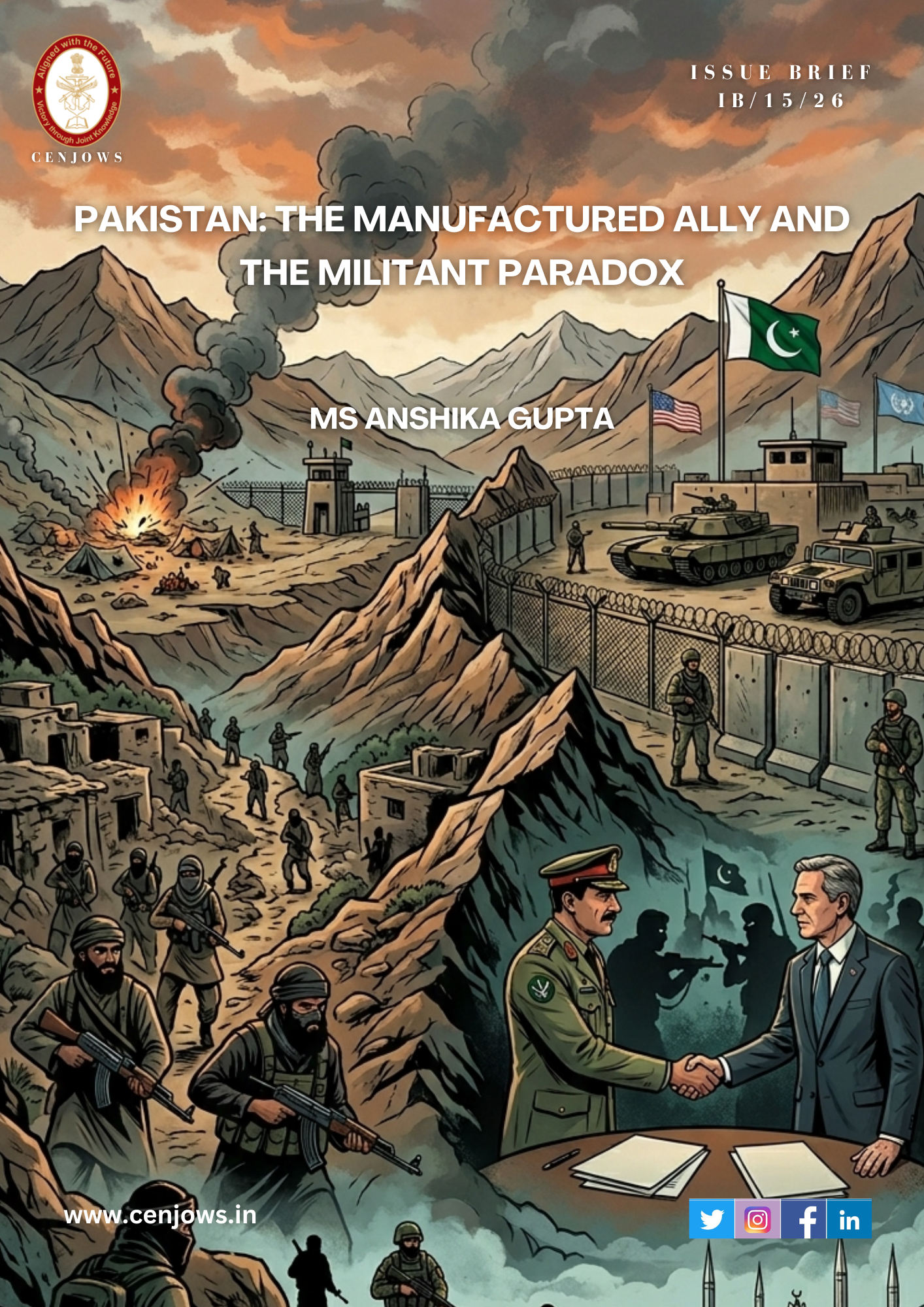
Pakistan’s paradoxical role as both a U.S. ally and a sponsor of terrorist groups has shaped South Asian geopolitics for decades. Despite receiving billions in military and economic aid, Pakistan’s deep state anchored in its military-intelligence establishment has consistently nurtured proxy groups such as the Afghan Taliban, the Haqqani network, and anti-India outfits like Lashkar-e-Taiba. The paper interrogates the contradictions of U.S.-Pakistan relations, highlighting Washington’s selective blindness to Pakistan’s duplicity, the empowerment of its deep state, and the limits of coercive diplomacy. From an Indian perspective, the analysis foregrounds Pakistan’s proxy terror doctrine, its manoeuvring within the Financial Action Task Force (FATF), and India’s resilience against asymmetrical warfare. By situating Pakistan’s behaviour within the broader matrix of U.S. strategic interests, regional security imperatives, and India’s counterterrorism calculus, the paper underscores the enduring challenge of managing a “manufactured ally” whose militant paradox continues to destabilise South Asia.
Keywords: Pakistan, India, Terrorism, U.S.- Pakistan relations