
Introduction
National security has been largely perceived as defending and securing the borders of a nation to protect its territorial integrity and political sovereignty against external threats. For much of the twentieth century, this narrative dominated strategic thinking and policymaking around the world, including in India. Security was understood as military might, border security, and the ability to deter or destroy hostile enemies. However, the nature of warfare has changed drastically in recent decades. The advent of globalisation, technological advancement, distribution of power, and the blurring of lines between war and peace have broadened the security agenda beyond traditional military agendas. As a result, states are constantly compelled to reconsider how security is conceptualised, evaluated, and executed.
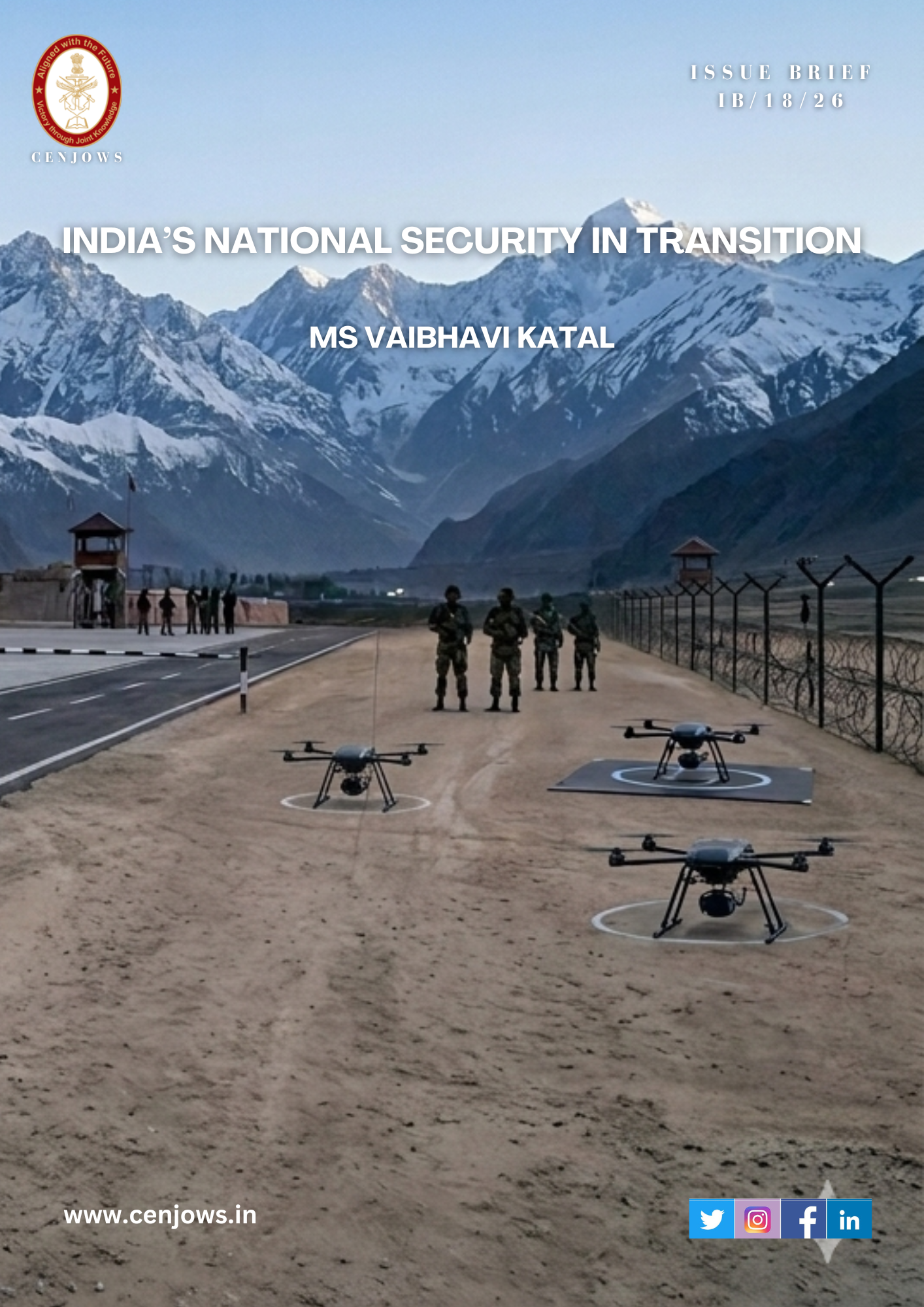
In India’s context, the necessity to re-evaluate has grown significantly over time, both in extent and depth. India today is confronting a complex and multifaceted security environment characterised by unsettled territorial disputes, rising power politics, ongoing internal security concerns, and the emergence of non-traditional threats like cyber warfare, information warfare, and economic coercion. These interconnected challenges operate in ways that existing security frameworks, rooted in traditional state-centric conflict, are ill-equipped to manage effectively. Consequently, India’s security thinking is at a crossroads, where consistency with previous methods clash with the demands of a constantly shifting strategic terrain. This chapter posits that India’s security thinking must undergo a thorough re-examination since the conceptual principles, threat perceptions, and institutional frameworks that have governed it have grown out of trend with current reality. The chapter is structured around four sections that elaborate on this argument.
First, it contextualises national security and analyses its progression beyond traditional military conceptions. Second, it explores how past events and strategic culture have influenced India’s security policy. Third, it examines the transition from traditional to non-traditional and hybrid challenges that India encounters. Finally, it clarifies why traditional security frameworks are outdated and underlines the need for a more integrated and versatile approach towards national security.